What you'll learn
- Plants make their own food; animals, including humans, must eat
- Nutrition means the useful things our bodies get from food
- Carbohydrates, protein, fats, vitamins, minerals, fibre and water and their jobs
- How to build a balanced plate with the right amounts
- Treats are fine now and then, in small amounts
- Different animals eat different foods and need different amounts
Chapter by chapter
- Plants make food, animals eat it
Year 3 science · 1
- Nutrients: what foods give us
Year 3 science · 1
- A balanced plate: right amounts
Year 3 science · 1
- What different animals eat
Year 3 science · 1
- Nutrition Champion quiz (8 questions)
What the chapters cover in the national curriculum in England:
- Year 3 science: Identify that animals, including humans, need the right types and amount of nutrition, and that they cannot make their own food; they get nutrition from what they eat
About this adventure
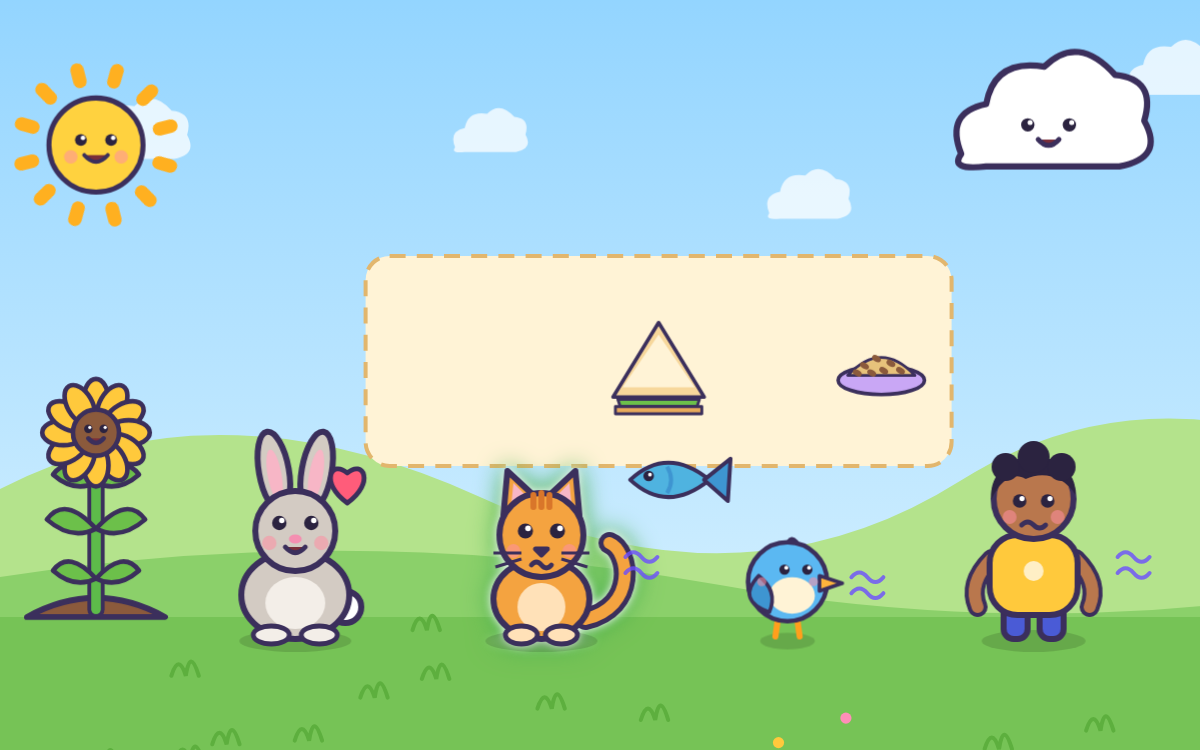
Food and Nutrition is an interactive science game that teaches children aged 6–9 why animals, including humans, need the right types and amounts of food, and why they cannot make their own food the way plants can. It follows the Year 3 science curriculum in England.
Guided by Pip the Pea, children send sunshine and rain to a growing plant, try the same on a hungry bunny, and discover that animals have to eat. They tap foods to uncover nutrients such as carbohydrates for energy, protein for growth and fibre for a healthy tummy, then sort foods into jars.
Later they fix a plate covered in sweets, choose a lunch that is neither too big nor too small, and feed a panda, a lion, a rabbit and a hen as a zookeeper. Spoken narration, drag-and-drop tasks and short quizzes keep reading light.
Questions and answers
Why do animals need food?
Animals need food because it gives them energy to move, materials to grow and repair their bodies, and things that keep them healthy. Unlike plants, they cannot make food themselves, so they must eat plants or other animals.
Can animals make their own food like plants?
No, animals cannot make their own food. Plants use sunlight, air and water to make food in their leaves, but animals, including humans, have to get their nutrition by eating.
What are the main nutrients in food, explained simply?
The main nutrients are carbohydrates, protein, fats, vitamins and minerals, plus fibre and water. Carbohydrates give energy, protein helps the body grow and repair, a little fat gives energy and warmth, vitamins and minerals keep us healthy, and fibre helps digestion.
What age is this nutrition game for?
The game is designed for children aged 6 to 9. It matches the Year 3 science curriculum in England, and spoken narration with short on-screen instructions means early readers can follow along too.
What does the food and nutrition game include, and how long does it take?
It takes about 30 minutes to play everything. There is a short warm-up, four chapters with guided activities and quick checks, and a final eight-question quiz, and children can start any chapter from the map.
More to explore
See all
Skeletons and Muscles: Build a Body with Skelly
Learn how skeletons and muscles work together: build a skeleton, test how bones protect you, and make an arm…
Pollination and Seed Dispersal: A Bumblebee Adventure
Learn how pollination and seed dispersal work: fly Bramble the bumblebee between flowers, grow fruit and send…
Multiplication and Division: Share, Group and Grow a Garden
Learn multiplication and division with equal groups, sharing, grouping and arrays, then help Dotty the ladybi…
Adding and Subtracting: Hop Along with Hopper the Frog
Learn adding and subtracting with number bonds, number lines and columns, then tap, hop and exchange counters…
Place Value to a Million: A Rocket Mission with Pip
Learn place value to a million and how to count in powers of 10. Build blocks, set digits on a place value ch…
Instruments of the Orchestra: Build It, Then Conduct It
Learn how the instruments of the orchestra make their sounds, then build all four families step by step and c…
Letter Sounds and Blending: Read Words with Bip the Robot
Learn letter sounds and blending: match letters to sounds, hear first sounds and push sounds together to read…
 TapLearn