What's inside
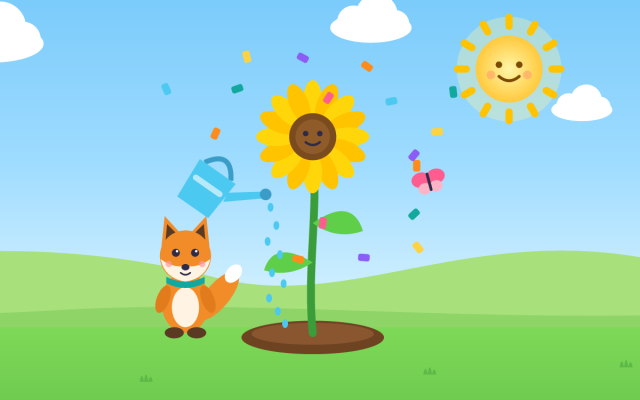
- A Plant’s Big Adventure
- Inside a Flower
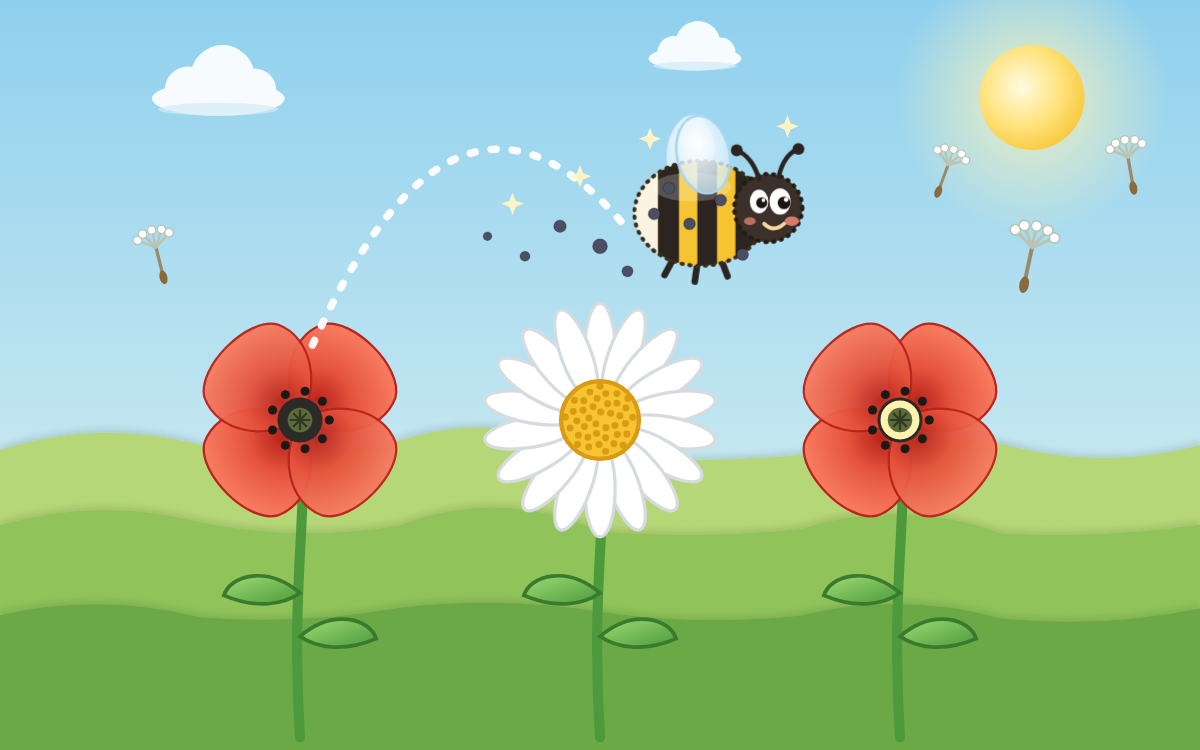
- Pollen on the Move
- From Flower to Fruit
- Seeds on the Move
- Seed Detectives
- Show What You Know! 12 questions
What you'll learn
- The stages of a flowering plant’s life cycle, from germination to seed dispersal
- What the petals, stamen, stigma and ovary of a flower each do
- How pollination moves pollen to a stigma, by animals or the wind
- How a pollinated flower’s ovary swells into a fruit with seeds inside
- Why seeds spread out, and how wind, animals, water and pods carry them
- How to read a seed’s shape to predict how it travels
About this adventure
Pollination and Seed Dispersal is a free interactive game that teaches children aged 7–9 how flowering plants make seeds and how those seeds spread. It follows the Year 3 plants topic in the national curriculum for England, with spoken narration, captions and gentle hints throughout.
Players join Bramble the bumblebee across six chapters. They build a life-cycle wheel, label a flower’s petals, stamen, stigma and ovary, and carry pollen between flowers of the same kind. They also slide a time bar to grow a tomato, blow dandelion seeds on the wind and use a yes/no seed key.
Along the way they meet the key ideas: pollination (pollen moving from a stamen to a stigma), seed formation (the ovary swelling into a fruit) and seed dispersal by wind, animals, water and bursting pods. A 12-question final challenge brings it all together.
Questions and answers
What is pollination, in simple words?
Pollination is when pollen moves from a flower’s stamen to the sticky stigma of a flower of the same kind. Insects such as bees, moths and beetles carry it by accident while feeding, and some plants, like hazel, rely on the wind.
How do seeds travel away from the parent plant?
Seeds travel by wind, animals, water or bursting pods. Dandelion seeds float on fluffy parachutes, burrs hook onto fur, birds eat berries and drop the seeds elsewhere, coconuts float across the sea, and gorse pods split open and fling out their seeds.
Why do plants need to spread their seeds?
Plants spread their seeds so that seedlings are not crowded under the parent plant. Away from its shade, a seedling gets more light, water and space, which gives it a better chance of growing strong.
What age is the Pollination and Seed Dispersal game for?
It is designed for children aged 7 to 9 and matches the Year 3 plants topic in the national curriculum for England. Narration, hints and step-by-step guidance support younger players, while stretch questions challenge confident ones.
What does the game include, and how long does it take?
The game has six chapters, each with an animated introduction, guided activities, practice, a quick check and a recap, plus a 12-question final challenge. Playing everything takes around 70 minutes, and children can stop and carry on later.
Next in Plants
See all
Animal Habitats: Build a Woodland with Dotty the Ladybird
Discover how animal habitats give living things food, water and shelter, as you build a woodland, match anima…
Place Value to a Million: A Rocket Mission with Pip
Learn place value to a million and how to count in powers of 10. Build blocks, set digits on a place value ch…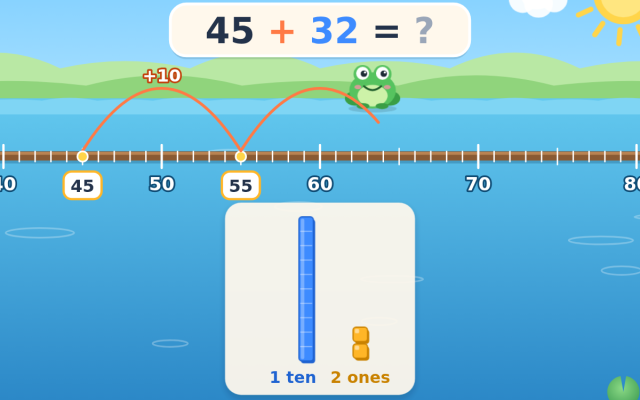
Adding and Subtracting: Hop Along with Hopper the Frog
Learn adding and subtracting with number bonds, number lines and columns, then tap, hop and exchange counters…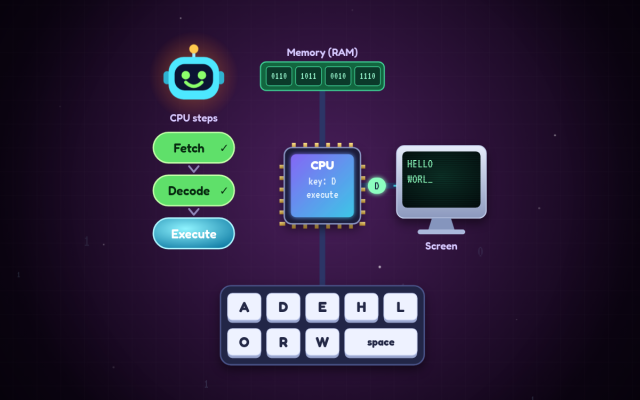
How Computers Work: A Time Machine Adventure with Bit
Learn how computers work, from the abacus to the CPU. Travel through time with Bit, build a computer and foll…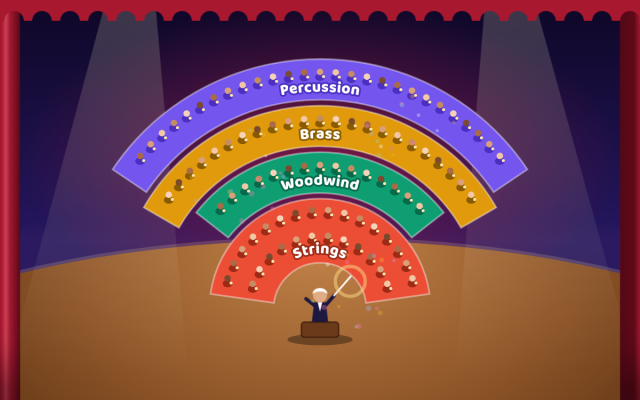
Instruments of the Orchestra: Build It, Then Conduct It
Learn how the instruments of the orchestra make their sounds, then build all four families step by step and c…
How Money Works: The Story from Barter to Bank Cards
Learn where money came from and how it works today: swap goods, mint coins, open a bank and tap to pay, one s…