Skeletons and Muscles
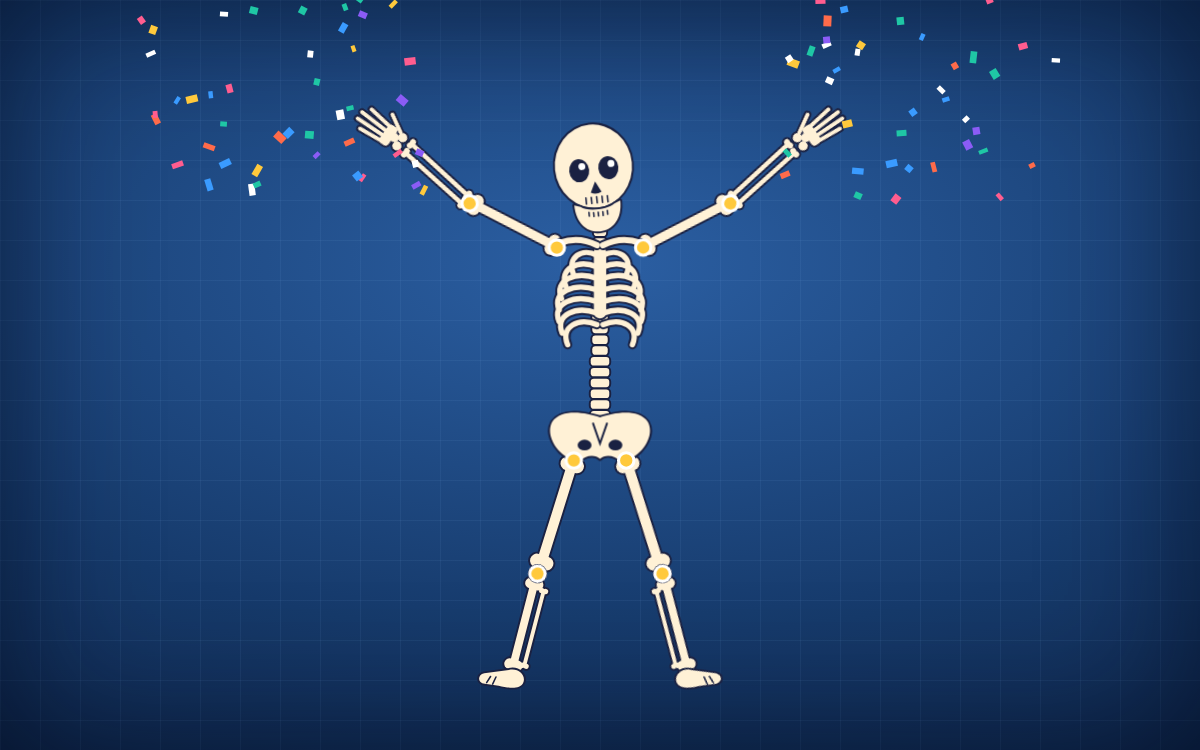
Build a Body with Skelly
Learn how skeletons and muscles work together: build a skeleton, test how bones protect you, and make an arm bend using muscles.
- Ages 6–9
- About 25 min
- 5 chapters + quiz
- Easy start
- Human Body
What's inside
- Build a skeleton
- Support and protect
- Joints
- Muscle power
- Animal skeletons
- Big quiz 6 questions
What you'll learn
- The names of main bones, including the skull, spine, ribcage and femur
- How the skeleton supports the body and protects the brain, heart and lungs
- What a joint is, and how hinge and ball-and-socket joints move
- How tendons join muscles to bones so muscles can pull them
- Why muscles work in pairs: one contracts while the other relaxes
- The difference between an endoskeleton, an exoskeleton and no skeleton
About this adventure
Skeletons and Muscles is a free interactive game that teaches children aged 6–9 how their skeleton supports and protects the body and how muscles make it move. Skelly the skeleton gives one short spoken instruction at a time, so every idea is learned by doing.
Players build a skeleton bone by bone, from the skull and spine to the pelvis and leg bones, then slip it inside a floppy body to see how bones give support. They cover a soft brain with the skull, wrap the ribcage around the heart and lungs, and test the protection with a bouncing ball.
Next they bend hinge joints such as the elbow and knee, attach the biceps and triceps with tendons, and find out that muscles can only pull, so they work in pairs. The game ends with sorting animals by skeleton type and a short quiz.
Questions and answers
What are the three main jobs of the skeleton?
The skeleton supports the body, protects soft organs and helps us move. Bones give the body its shape, the skull guards the brain and the ribcage guards the heart and lungs, while joints let bones bend and turn when muscles pull on them.
How do muscles move bones, in simple words?
Muscles move bones by pulling on them. Each muscle is joined to bone by a tendon, and when it contracts it gets shorter and fatter and pulls the bone. Muscles cannot push, so they work in pairs, like the biceps bending the arm and the triceps straightening it.
What is the difference between an endoskeleton and an exoskeleton?
An endoskeleton is a skeleton inside the body, made of bones, as in humans, fish and birds. An exoskeleton is a hard case on the outside of the body, as on a crab or a beetle. Some animals, such as worms and jellyfish, have no skeleton at all.
What age is this skeletons and muscles game for?
The game is designed for children aged about 6 to 9 and matches the Year 3 science topic on skeletons and muscles in the English national curriculum. Spoken instructions guide every step, so children who are still gaining reading confidence can play along.
How long does the game take, and what does it include?
Playing everything takes about 25 minutes. There are five hands-on chapters, on building a skeleton, support and protection, joints, muscles and animal skeletons, followed by a six-question quiz, and progress is saved so children can carry on later.
Next in Human Body
See all
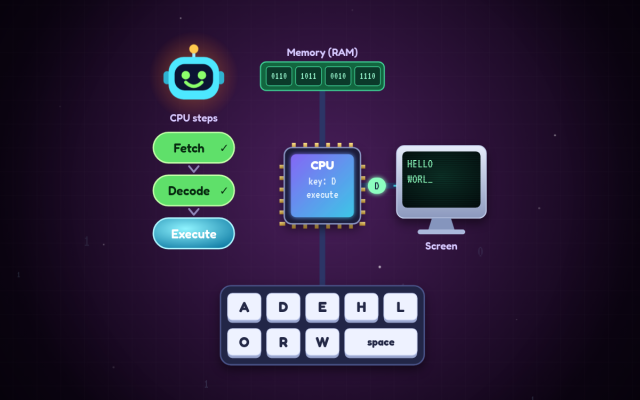
How Computers Work: A Time Machine Adventure with Bit
Learn how computers work, from the abacus to the CPU. Travel through time with Bit, build a computer and foll…
Adding and Subtracting: Hop Along with Hopper the Frog
Learn adding and subtracting with number bonds, number lines and columns, then tap, hop and exchange counters…
Instruments of the Orchestra: Build It, Then Conduct It
Learn how the instruments of the orchestra make their sounds, then build all four families step by step and c…
How Money Works: The Story from Barter to Bank Cards
Learn where money came from and how it works today: swap goods, mint coins, open a bank and tap to pay, one s…
Multiplication and Division: Share, Group and Grow a Garden
Learn multiplication and division with equal groups, sharing, grouping and arrays, then help Dotty the ladybi…
History of Money Explorer: Coins, Banks and Inflation
Discover the history of money at your own pace: explore ten chapters from barter to digital payments, with ac…