What Is Friction
A Slippery Penguin Adventure
Learn what friction is, how it slows things down and when it helps, by pushing boxes, rolling toy cars down a ramp and braking a bike.
- Ages 7–9
- About 30 min
- 4 chapters + quiz
- Easy start
- Forces & Energy
What's inside
- Push Station: Meet friction
- Ramp Lab: Rough or smooth?
- Grip Hill: When friction helps
- Squeak Workshop: When friction gets in the way
- Champion Cup quiz 10 questions
What you'll learn
- Friction is a force that acts where two surfaces rub together
- Friction pushes against movement, which slows things down
- Rough surfaces make more friction than smooth ones like ice
- A fair test changes only one thing, such as the surface
- Friction helps us grip, walk and stop with brakes
- Oil and smooth surfaces reduce friction when it gets in the way
About this adventure
What Is Friction is a free interactive game that teaches children aged 7–9 how friction slows moving things down and when it helps us. It follows the Forces and Magnets unit for Year 3 KS2 science, and Pebble the penguin guides players with spoken instructions.
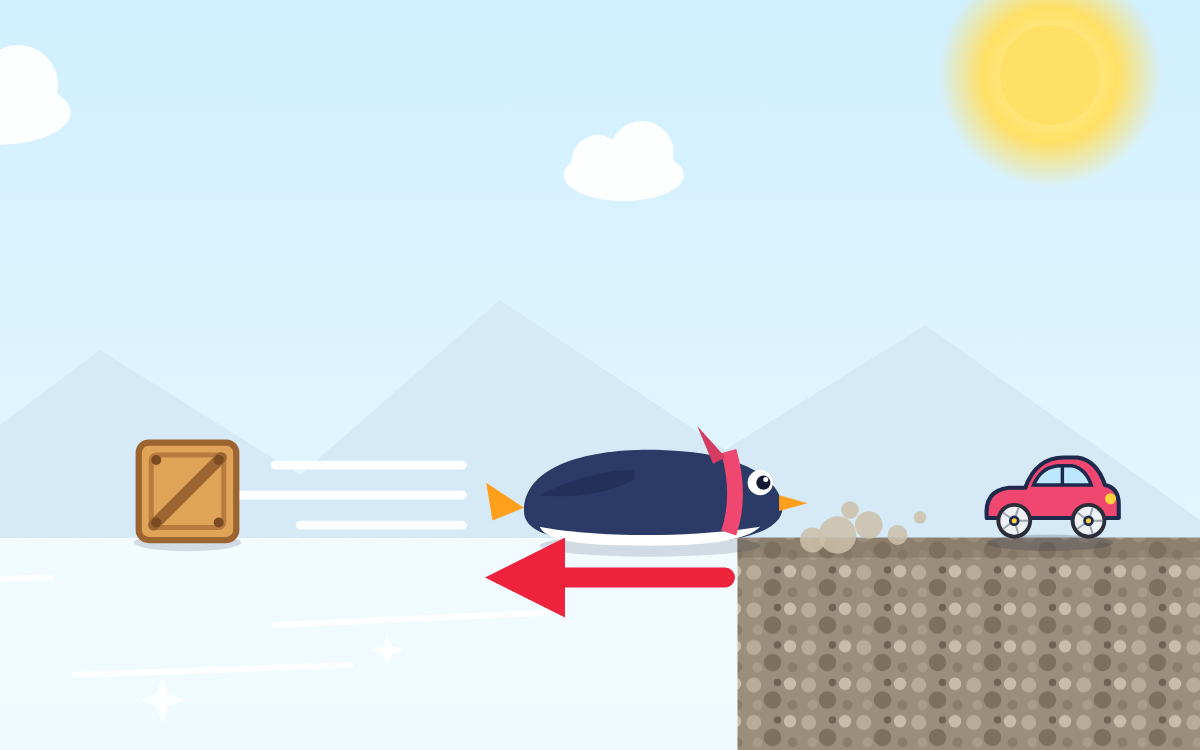
Children swipe a box and watch a red arrow show friction pushing against the movement. In a fair test, they roll a toy car onto ice, wood, carpet and gravel, then use a magnifying glass to see the bumps on each surface. Later they pick grippy shoes for a muddy hill, hold a bike brake to stop before a pond and oil a squeaky cart.
A ten-question quiz checks what they have learned. After a wrong answer in the stations, a gentle hint helps them try again.
Questions and answers
What is friction, in simple words?
Friction is a force that happens when two surfaces rub or slide against each other. It pushes against the movement, which is why a sliding box or a rolling toy car slows down and then stops.
Why do rough surfaces make more friction than smooth ones?
Rough surfaces have bigger bumps that catch on each other, so they resist movement more. Smooth surfaces such as ice still have tiny bumps, so they have a little friction, just less than rough ones like gravel.
When is friction helpful in everyday life?
Friction is helpful whenever we need grip or need to stop. Shoe treads grip the ground, bike brake pads rub on the wheel to slow it down, and sand sprinkled on an icy path adds friction so people don't slip.
What age is this friction game for?
The game is designed for children aged 7 to 9 and matches the Year 3 Forces and Magnets unit in KS2 science. Every instruction is read aloud and shown as a short caption, so early readers can play on their own.
What does the friction game include and how long does it take?
It has four guided stations and a ten-question quiz, and takes about 30 minutes to play through. Players start from a park map, where they can pick any station or replay one at any time.
Next in Forces & Energy
See all
Adding and Subtracting: Hop Along with Hopper the Frog
Learn adding and subtracting with number bonds, number lines and columns, then tap, hop and exchange counters…
How Computers Work: A Time Machine Adventure with Bit
Learn how computers work, from the abacus to the CPU. Travel through time with Bit, build a computer and foll…
Instruments of the Orchestra: Build It, Then Conduct It
Learn how the instruments of the orchestra make their sounds, then build all four families step by step and c…
Multiplication and Division: Share, Group and Grow a Garden
Learn multiplication and division with equal groups, sharing, grouping and arrays, then help Dotty the ladybi…
How Money Works: The Story from Barter to Bank Cards
Learn where money came from and how it works today: swap goods, mint coins, open a bank and tap to pay, one s…
Adverbs of Time, Place and Cause: Pip's Island Quest
Learn how adverbs of time, place and cause tell us when, where and why. Grow a sunflower, find a hiding kitte…