Animal Habitats
Build a Woodland with Dotty the Ladybird
Discover how animal habitats give living things food, water and shelter, as you build a woodland, match animals to homes and lift a log to find minibeasts.
- Ages 5–8
- About 25 min
- Easy start
- Animals & Nature
What you'll learn
- What a habitat is and how it provides food, water and shelter
- What animals and plants need to stay alive and grow
- How polar bears, camels and frogs are suited to their habitats
- What a microhabitat is and why minibeasts like dark, damp places
- How a simple food chain links grass, a rabbit and a fox
- How to sort things into living, dead and never been alive
About this adventure
Animal Habitats is a free interactive game that teaches children aged 5–8 what a habitat is and how it gives animals and plants the food, water and shelter they need.
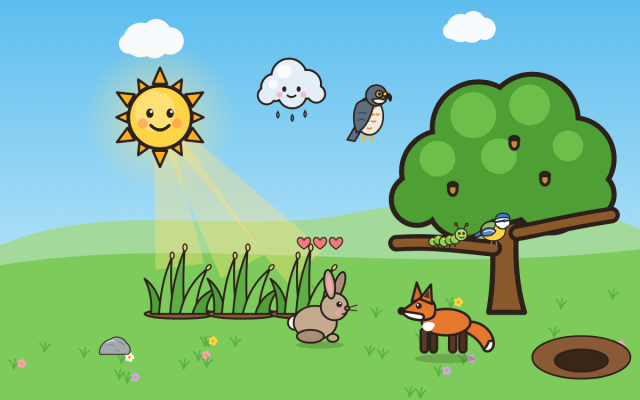
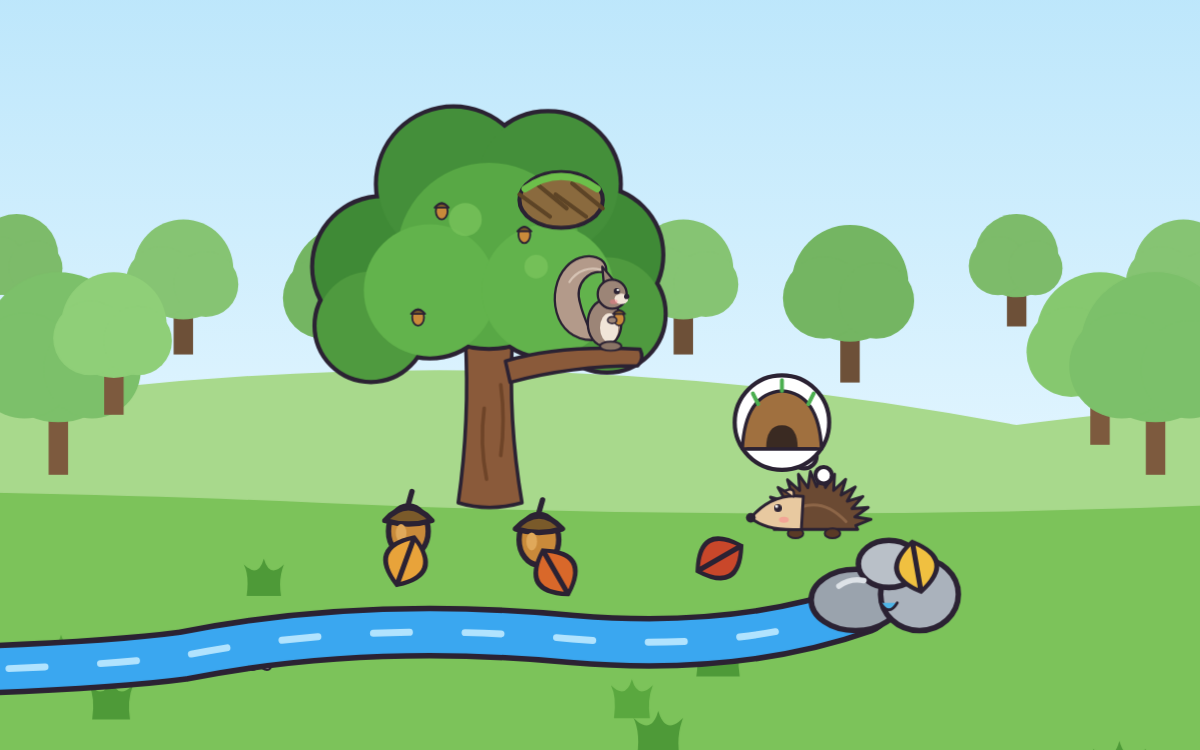
Guided by Dotty the ladybird, players build each scene one step at a time. They feed a rabbit and dig it a burrow, grow a seed into a sunflower, and plant an acorn that becomes a home for a squirrel. Then they help a polar bear, a camel and a frog find a habitat that suits them, and see what goes wrong in the wrong one.
Later chapters explore microhabitats (tiny homes such as the damp, dark space under a log), a simple food chain from grass to rabbit to fox, and sorting things into living, dead and never alive. It follows the Year 2 science topic Living things and their habitats.
Questions and answers
What is a habitat, in simple words?
A habitat is the natural home of an animal or plant, where it finds the food, water and shelter it needs. A woodland, a pond and the Arctic are all habitats, and each one suits the living things found there.
What is a microhabitat?
A microhabitat is a very small habitat inside a bigger one, such as the space under a log or a stone. Minibeasts like woodlice and earthworms live there because it stays dark, damp and cool.
Why can't a polar bear live in the desert?
A polar bear would overheat in the desert because its thick fur and layer of fat help it keep warm in the freezing Arctic. Animals live in habitats that suit their bodies, so the wrong habitat can make survival very hard.
What age is this habitats game for?
This game is made for children aged 5 to 8 and follows the Year 2 science topic Living things and their habitats. Instructions are short, Dotty can read them aloud, and a pointing hand appears if a child gets stuck.
How long does the habitats game take to play?
The whole game takes about 25 minutes, split into six short chapters that can be played in one go or one at a time. The chapters cover needs, habitats, suited homes, microhabitats, food chains and living things.
Next in Animals & Nature
See all
Animal Life Cycles: Grow a Frog, Butterfly, Robin and Rabbit
Learn how animal life cycles work by helping a frog, butterfly, robin and rabbit grow, from egg or birth to a…
Skeletons and Muscles: Build a Body with Skelly
Learn how skeletons and muscles work together: build a skeleton, test how bones protect you, and make an arm…
Place Value to a Million: A Rocket Mission with Pip
Learn place value to a million and how to count in powers of 10. Build blocks, set digits on a place value ch…
Adding and Subtracting: Hop Along with Hopper the Frog
Learn adding and subtracting with number bonds, number lines and columns, then tap, hop and exchange counters…
How Computers Work: A Time Machine Adventure with Bit
Learn how computers work, from the abacus to the CPU. Travel through time with Bit, build a computer and foll…
How Money Works: The Story from Barter to Bank Cards
Learn where money came from and how it works today: swap goods, mint coins, open a bank and tap to pay, one s…