Classifying Living Things: A Nature Sort with Hoot
Learn how to group living things and use classification keys to name them, by sorting animals and plants and building your own yes or no key.
- Ages 7–10
- About 50 min
- Some thinking
- Animals & Nature
Learn how to group living things and use classification keys to name them, by sorting animals and plants and building your own yes or no key.
Year 4 science · 1
Year 4 science · 1
Year 4 science · 1
Year 4 science · 2
Year 4 science · 2
Year 4 science · 1 Year 4 science · 2
What the chapters cover in the national curriculum in England:
Classifying Living Things is an interactive science game that teaches children aged 7–10 how to group animals and plants and use classification keys to identify and name them. It follows the Year 4 science curriculum for England.
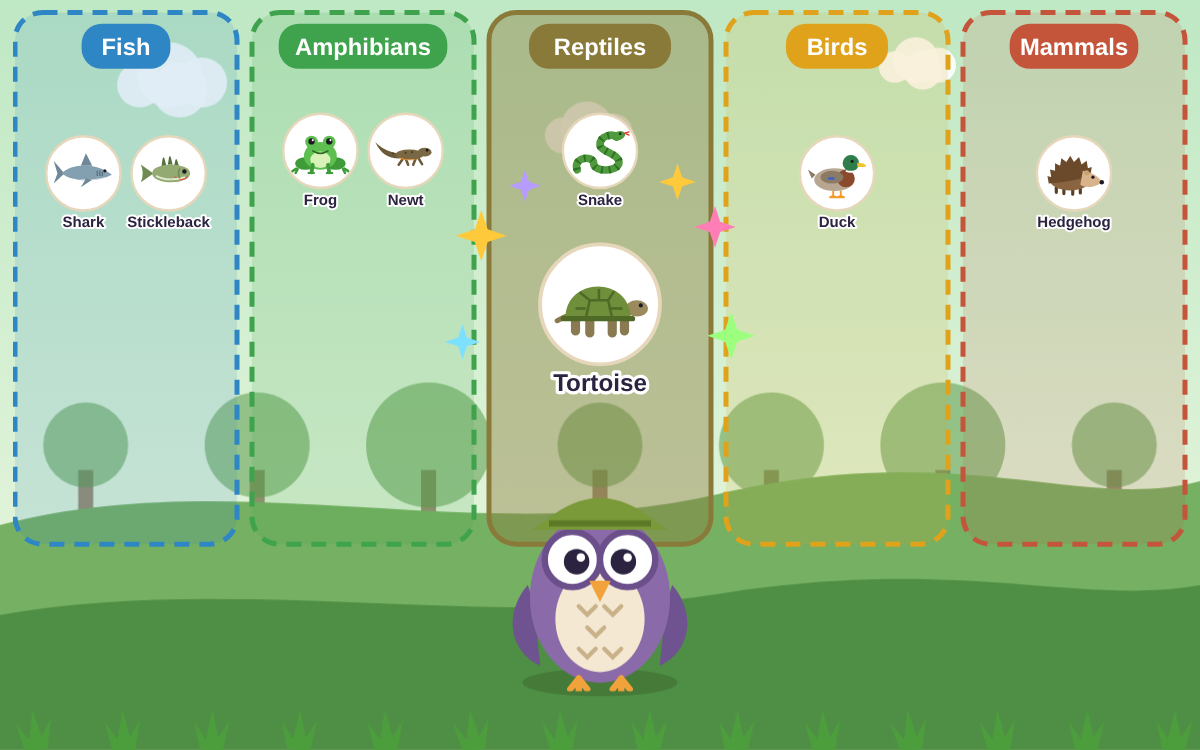
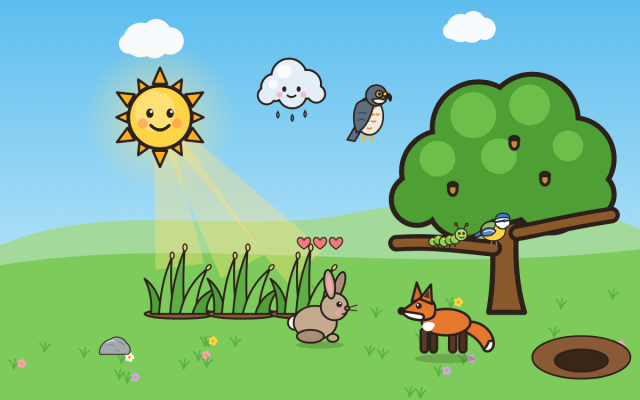
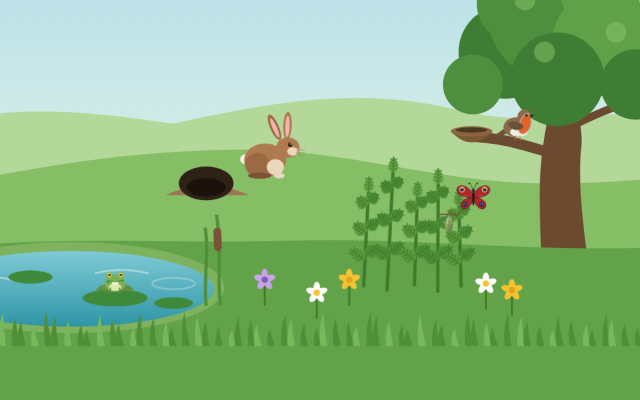
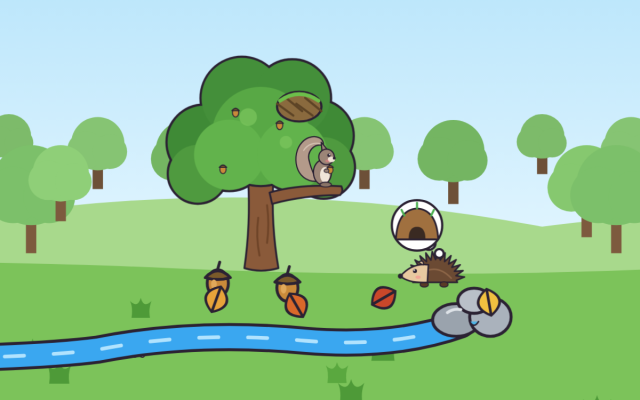
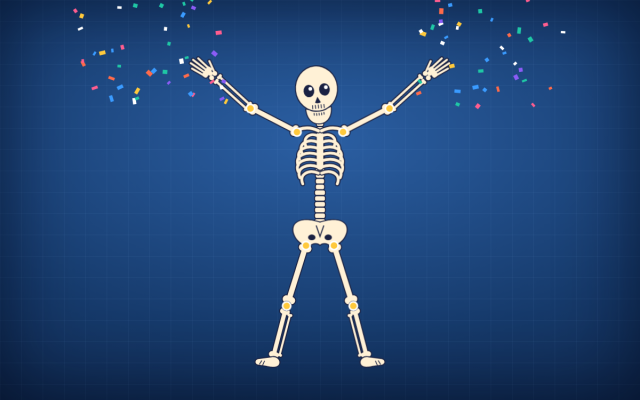
Guided by Hoot the owl, players drag living things into groups and find that the same set can be sorted in many ways: by type, by whether they can fly, by number of legs, or in a Venn diagram. An X-ray scanner shows which animals are vertebrates (with a backbone) and which are invertebrates (without one). A magnifying glass reveals the tiny flowers on grasses and trees.
Players then choose good yes or no questions about things they can see or count. They use these questions to build a branching key, follow a number key and name a mystery animal. A final 10-question quiz checks what they have learned.
A classification key is a set of yes or no questions that helps you name a living thing. You start at the first question, follow the answer that fits, and keep going until only one name is left.
Vertebrates are animals with a backbone, such as fish, amphibians, reptiles, birds and mammals. Invertebrates have no backbone, such as insects, spiders, snails, slugs and worms. Most kinds of animal on Earth are invertebrates.
No to both. A whale is a mammal because it breathes air and feeds its babies milk. A spider is not an insect because it has 8 legs and 2 body parts, while insects have 6 legs and 3 body parts.
It is designed for children aged 7 to 10, and it matches the Year 4 science objectives on grouping living things and using classification keys. Younger children may like to play with an adult, and older children can use it for revision.
Playing everything takes about 50 minutes. The game has six short chapters, each with a spoken introduction and recap, quick optional warm-ups and a final 10-question quiz. Children can start any chapter from the trail map and come back later.
 TapLearn
Getting it ready…
Great work on chapter 1! To open the next chapters, ask a grown-up to take a look.
To play this game, ask a grown-up to take a look. There are lots of free games you can play right now too!
First, make a free family account (no card needed) to save your child's progress. Membership then opens every chapter of every game for all your children: £6.99 a month, locked for as long as you stay a member.
That's all the learning time for today. Great work! Flip will be ready to play again tomorrow.