Prefixes and Suffixes
Build Words in Dot's Word Workshop
Learn how prefixes and suffixes like un-, dis-, mis-, re-, sub-, -ly and -ation change words, by building, splitting and sorting word blocks with Dot.
- Ages 7–9
- About 60 min
- 6 chapters + quiz
- Some thinking
- Phonics & Spelling
What's inside
- Un-Do Clocktower: un- and re-
- Muddle Market: dis- and mis-
- Submarine Dock: sub- and real prefixes
- Speedway: the suffix -ly
- Invitation Hall: the suffix -ation
- The Word Machine: longer words
- Grand Workshop Challenge 12 questions
What you'll learn
- What a prefix, root word and suffix are, using word sums
- How un- and re- change meaning, including un- meaning undo
- When to use dis- or mis-, keeping every letter at the join
- That sub- means under, and the prefix test for spotting look-alikes
- Adding -ly to make adverbs, including the y to i rule
- Adding -ation to turn a verb into a noun, like inform to information
About this adventure
Prefixes and Suffixes is a free interactive game that teaches children aged 7–9 how prefixes such as un-, dis-, mis-, re- and sub- and suffixes such as -ly and -ation change what words mean. It follows the Year 3 and 4 spelling curriculum for England.
Guided by Dot the robot, children work through six workshop rooms. They snap colour-coded word blocks together, split long words into parts, sort words and spell with letter tiles. Along the way they meet the root word, the part that can stand on its own, and learn the rules that change spelling, such as happy to happily and prepare to preparation.
Each chapter has a narrated animated intro, hints that build step by step, practice, a quick check and 'Did you know?' facts. The game ends with a 12-question challenge.
Questions and answers
What is a prefix and a suffix, in simple words?
A prefix is a group of letters added to the front of a word, and a suffix is added to the end. Both change the word: un- turns kind into unkind, and -ly turns quick into quickly.
What does the prefix un- mean?
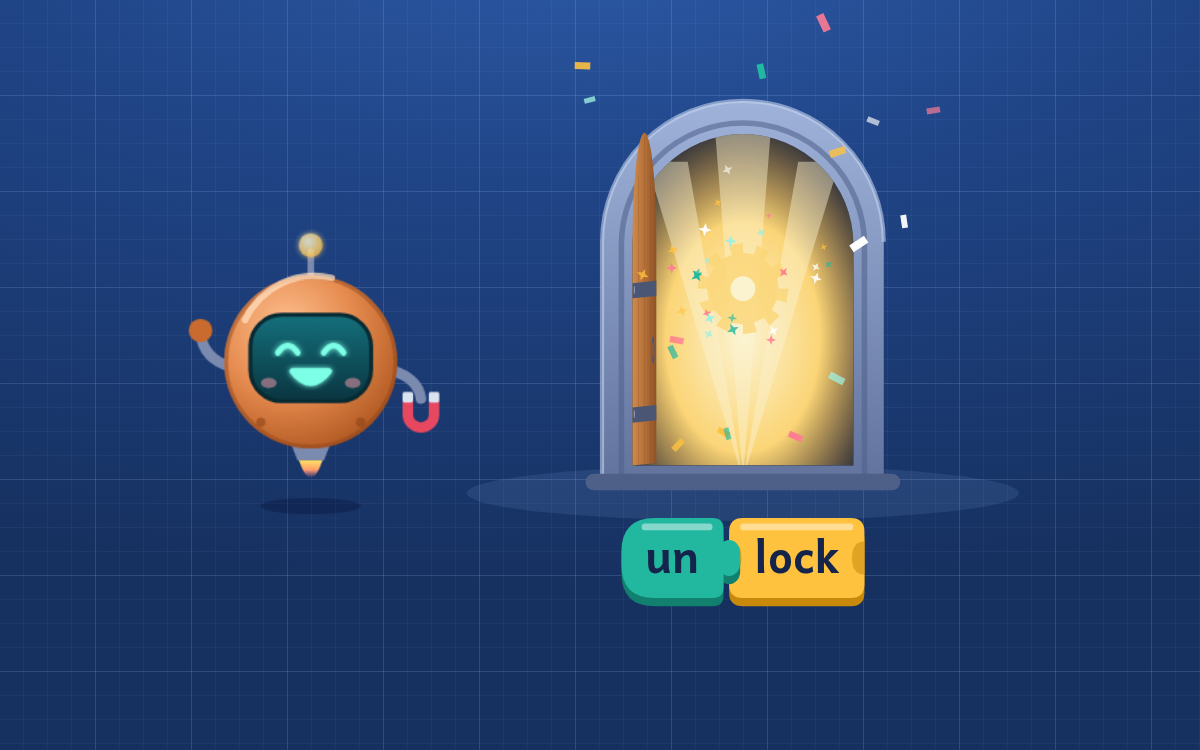
The prefix un- usually means 'not', as in unhappy or unfair. It can also mean undoing an action, as in untie, unlock or unzip. In the game, children sort un- words into these two meanings.
When do you change the spelling when adding -ly?
Most words just add -ly, as in sadly or finally. If a word ends in a consonant and y, the y changes to i (happily). Words ending in -le change to -ly (gently), words ending in -ic take -ally (basically), and truly and publicly are exceptions.
What age is this prefixes and suffixes game for?
It is designed for children aged 7–9, matching Years 3 and 4 of the national curriculum for England. The final chapter on longer words like misinformation also gives confident learners an extra challenge.
What does the game include and how long does it take?
There are six chapters, each with an animated intro, guided steps, practice and a quick check, plus a 12-question final challenge. Playing everything takes about an hour, and progress is saved so children can play one chapter at a time.
Next in Phonics & Spelling
See all

Place Value to a Million: A Rocket Mission with Pip
Learn place value to a million and how to count in powers of 10. Build blocks, set digits on a place value ch…
Adding and Subtracting: Hop Along with Hopper the Frog
Learn adding and subtracting with number bonds, number lines and columns, then tap, hop and exchange counters…
How Computers Work: A Time Machine Adventure with Bit
Learn how computers work, from the abacus to the CPU. Travel through time with Bit, build a computer and foll…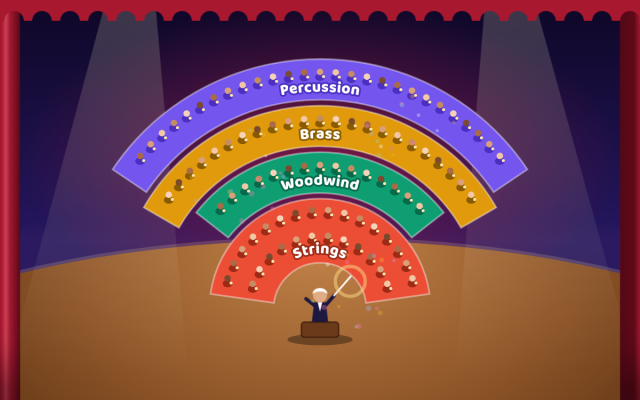
Instruments of the Orchestra: Build It, Then Conduct It
Learn how the instruments of the orchestra make their sounds, then build all four families step by step and c…
How Money Works: The Story from Barter to Bank Cards
Learn where money came from and how it works today: swap goods, mint coins, open a bank and tap to pay, one s…
Adverbs of Time, Place and Cause: Pip's Island Quest
Learn how adverbs of time, place and cause tell us when, where and why. Grow a sunflower, find a hiding kitte…