What you'll learn
- Money can come from gifts, pocket money and helping at home
- The difference between needs and wants, and why needs come first
- How to set a saving goal with a clear price
- Saving more each week means reaching a goal sooner
- Why keeping spending money separate protects your savings
- What interest is and how a bank helps savings grow
About this adventure
Saving Money: A Piggy Bank Adventure is a free interactive game that teaches children aged 6–10 how to save money for something they want. Penny the piggy bank guides every step aloud, one short instruction at a time, so children learn by doing rather than reading.
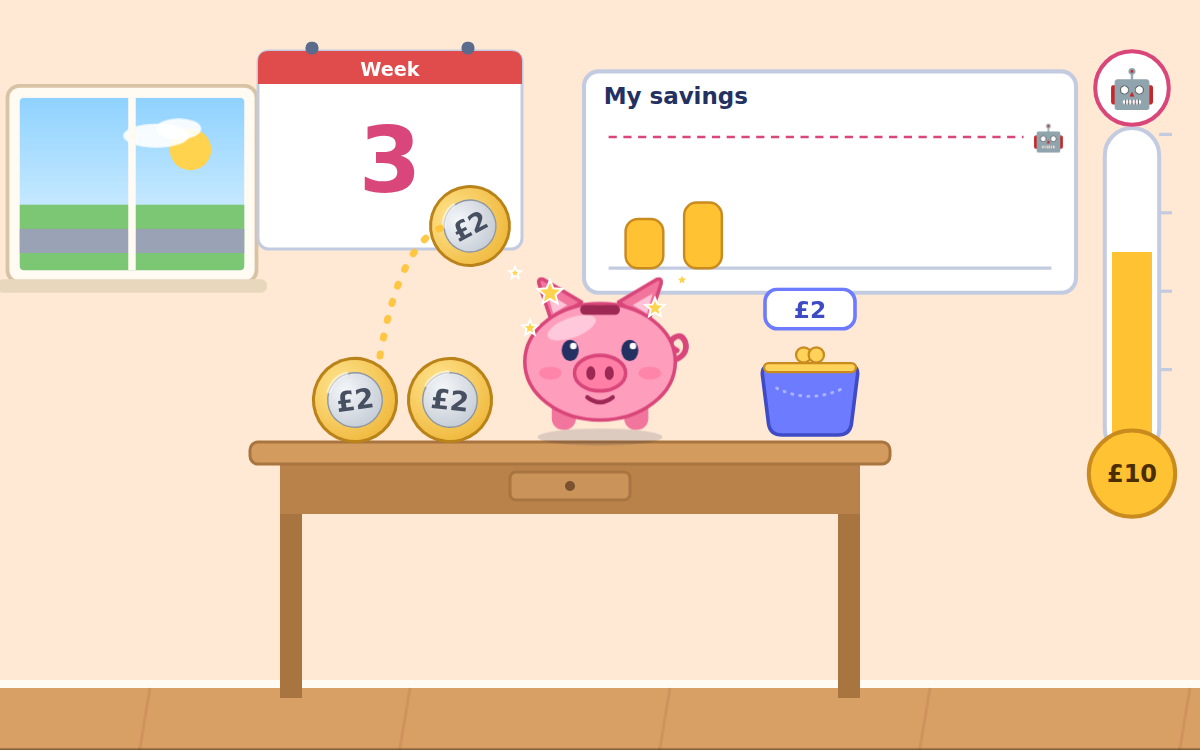
Players earn their first coins from a birthday gift and by helping at home, then sort needs from wants. They choose a toy as their saving goal, test different saving plans and see that saving £2 a week instead of £1 halves the wait. Week by week, they split pocket money between savings and a spending purse, decide whether to buy an ice cream, and watch a savings chart grow.
Finally, they buy their goal and discover interest: extra money a bank adds to savings each year, while money in a piggy bank stays the same.
Questions and answers
How can children start saving money?
Children can start saving money by choosing a goal, finding out its price and putting aside a set amount of pocket money each week. Keeping savings somewhere safe, like a piggy bank or a bank account, stops them being spent by accident.
What is the difference between a need and a want?
A need is something we must have to live and stay healthy, such as food, water, a home or warm clothes. A want is something nice to have but not essential, like sweets, toys or games, and wants are good things to save up for.
What is interest, in simple words?
Interest is extra money a bank adds to your savings as a reward for keeping your money there. For example, if a bank paid 5p for every £1 each year, £10 would grow to £10.50 after one year.
What age is this saving money game for?
The game is designed for children aged 6 to 10. Penny reads each instruction aloud, so children who are still learning to read can play, and it supports PSHE money learning at Key Stage 1 and lower Key Stage 2.
How long does the game take and what does it include?
It takes about 20 minutes to play all eight chapters. Children earn coins, sort needs and wants, pick a goal, test saving plans, save week by week, buy their goal, explore bank interest and finish with a Super Saver medal.
Next in Money
See all
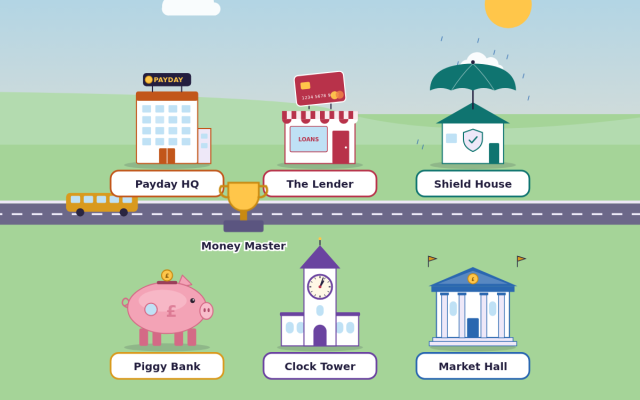
Personal Finance: Six Money Missions in Moneyville
Learn how personal finance works: payslips, budgets, credit, insurance, savings and pensions, by guiding Sam…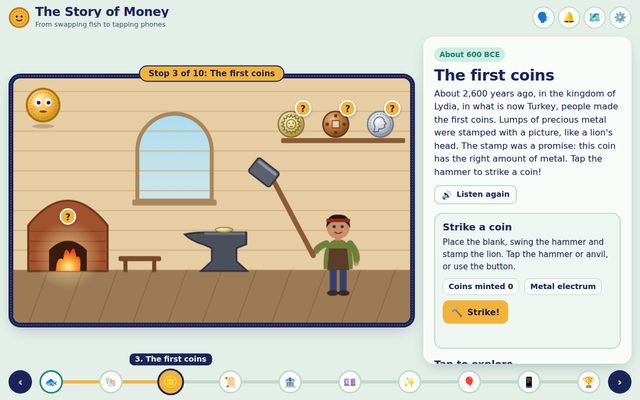
History of Money Explorer: Coins, Banks and Inflation
Discover the history of money at your own pace: explore ten chapters from barter to digital payments, with ac…
Place Value to a Million: A Rocket Mission with Pip
Learn place value to a million and how to count in powers of 10. Build blocks, set digits on a place value ch…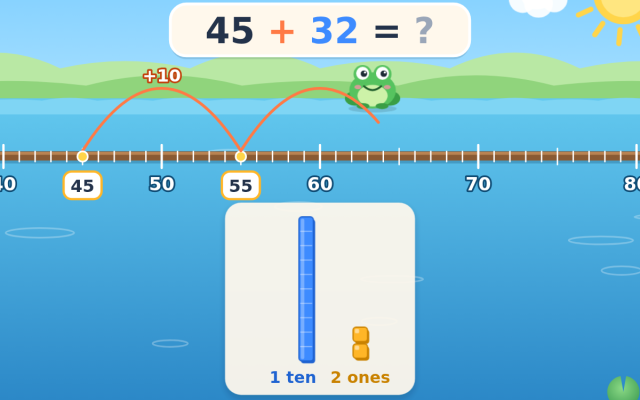
Adding and Subtracting: Hop Along with Hopper the Frog
Learn adding and subtracting with number bonds, number lines and columns, then tap, hop and exchange counters…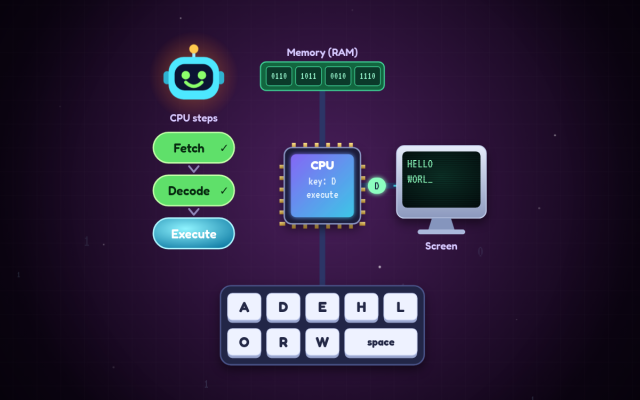
How Computers Work: A Time Machine Adventure with Bit
Learn how computers work, from the abacus to the CPU. Travel through time with Bit, build a computer and foll…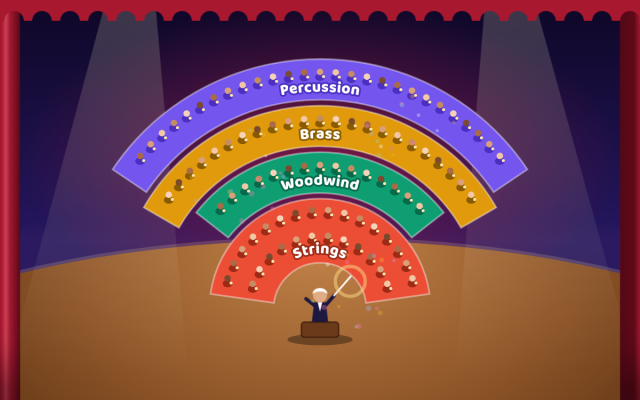
Instruments of the Orchestra: Build It, Then Conduct It
Learn how the instruments of the orchestra make their sounds, then build all four families step by step and c…