What you'll learn
- How Income Tax, National Insurance and pension turn gross pay into net pay
- Why paying only the minimum on a credit card costs more interest
- How premiums, excesses and pooling risk make insurance work
- How compound interest grows savings and how inflation reduces their value
- Why starting a workplace pension early, with employer money, matters
- How to match needs to financial products and spot scam messages
About this adventure
Personal Finance: Six Money Missions in Moneyville is a free interactive game that teaches teenagers aged 14–16 how personal finance works, from payslips and budgets to credit, insurance, savings and pensions. It covers the money topics in KS4 Citizenship.
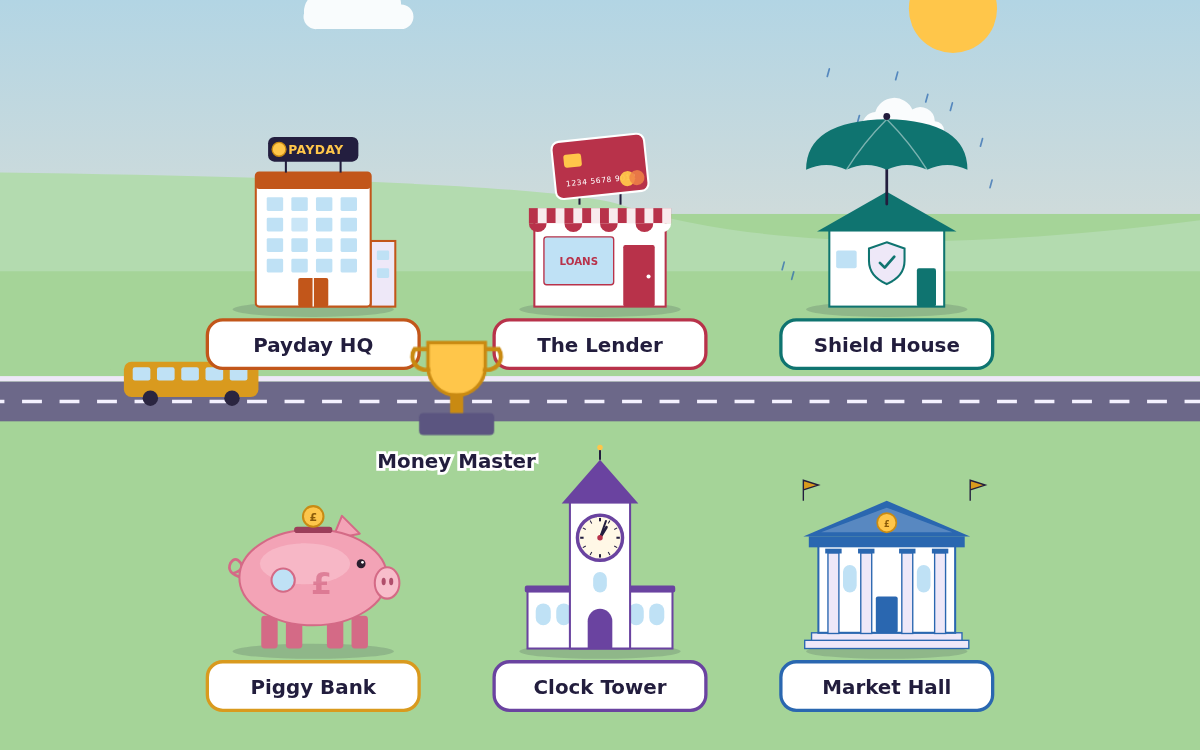
Players guide Sam through six missions, with Penny the talking penny giving one short instruction at a time. They take Income Tax and National Insurance off a payslip to find net pay, sort needs from wants, and watch a credit card debt grow at 24.9% APR. They collect premiums into an insurance pool, drag a dial to see compound interest build over 20 years, and compare pension pots for different starting ages.
In the Market Hall they match people to products such as a Lifetime ISA or a mortgage, and decide which phone messages are scams. An eight-question Money Master challenge tests everything at the end.
Questions and answers
What is personal finance, in simple words?
Personal finance is how you manage your own money: earning it, spending it, saving it, borrowing it and protecting it. It includes everyday skills such as reading a payslip, sticking to a budget, choosing a bank account and planning ahead with savings and a pension.
How does compound interest work?
Compound interest means the interest you earn is added to your savings, and then that interest earns interest too. For example, £100 at 5% a year becomes £105 after one year and £110.25 after two, so money grows faster the longer it is saved.
What is the difference between gross pay and net pay?
Gross pay is what you earn before anything is taken off, and net pay, or take-home pay, is what reaches your bank account. In the UK, employers usually deduct Income Tax, National Insurance and workplace pension contributions through PAYE.
What age is this personal finance game for?
It is designed for teenagers aged 14 to 16 and covers the personal finance topics in the Key Stage 4 Citizenship curriculum in England. Younger confident readers and adults brushing up on money basics can also play, because Penny guides every step out loud.
What does the Moneyville game include and how long does it take?
The game has six guided missions on pay and budgets, credit and debt, insurance, savings, pensions and financial products, plus an eight-question Money Master challenge. Playing everything takes about 40 minutes, and each mission can be played on its own in around five to seven minutes.
Next in Money
See all
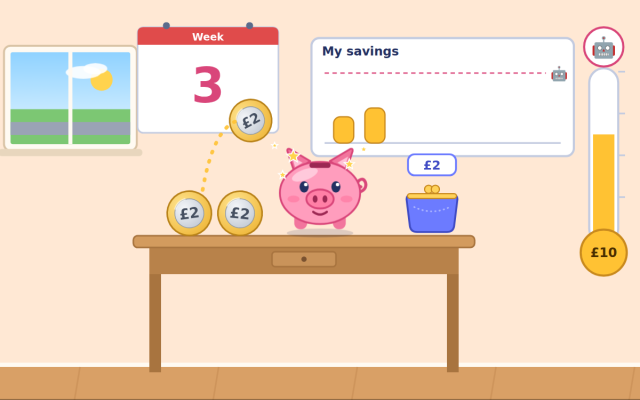
Saving Money: A Piggy Bank Adventure with Penny
Learn how saving money works: earn pocket money, choose a goal, make a weekly plan and watch your savings gro…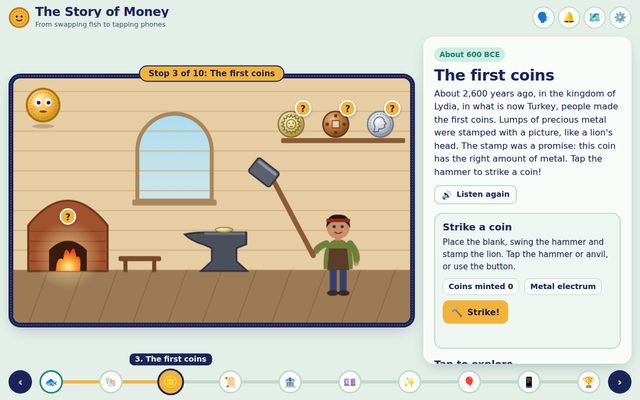
History of Money Explorer: Coins, Banks and Inflation
Discover the history of money at your own pace: explore ten chapters from barter to digital payments, with ac…
Place Value to a Million: A Rocket Mission with Pip
Learn place value to a million and how to count in powers of 10. Build blocks, set digits on a place value ch…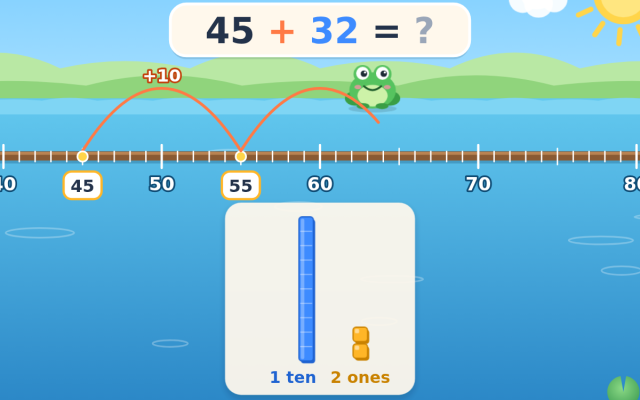
Adding and Subtracting: Hop Along with Hopper the Frog
Learn adding and subtracting with number bonds, number lines and columns, then tap, hop and exchange counters…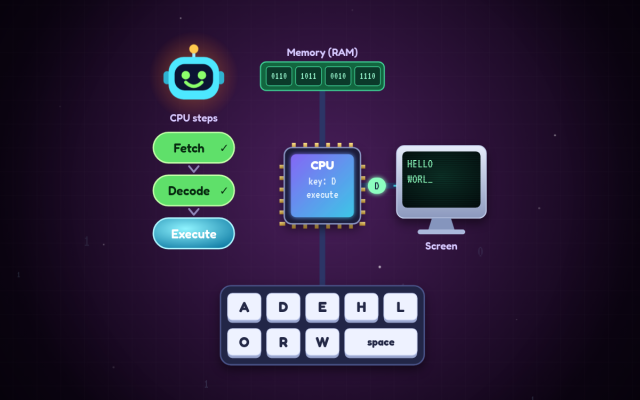
How Computers Work: A Time Machine Adventure with Bit
Learn how computers work, from the abacus to the CPU. Travel through time with Bit, build a computer and foll…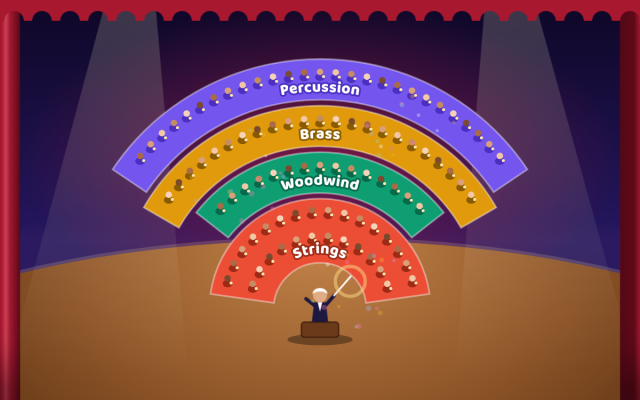
Instruments of the Orchestra: Build It, Then Conduct It
Learn how the instruments of the orchestra make their sounds, then build all four families step by step and c…