What's inside
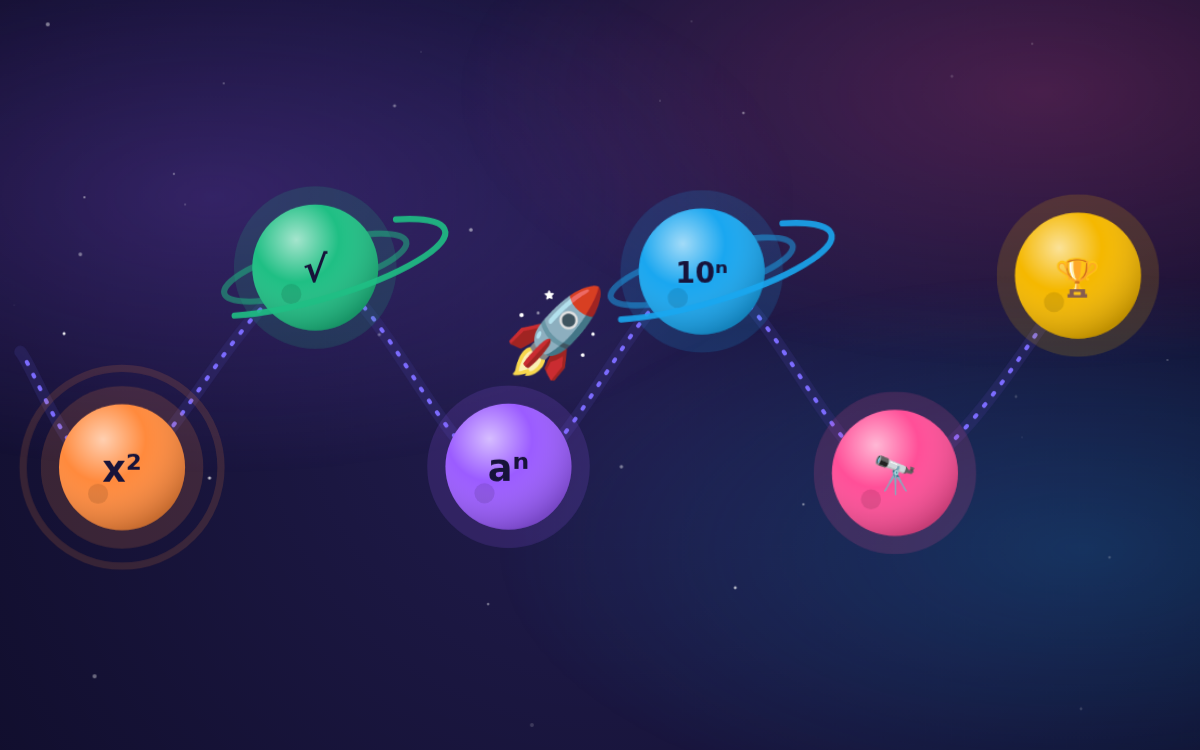
- Power Tower
- Root Explorer
- Index Laws Lab
- Standard Form
- Cosmic Zoom
- Challenge Arena 10 questions
What you'll learn
- What an index (power) means as repeated multiplication, like 2⁵
- Why any non-zero number to the power 0 equals 1
- What a negative index means, such as 2⁻² = ¼
- How square roots and cube roots undo squaring and cubing
- The three index laws for multiplying, dividing and raising powers
- How to write huge and tiny numbers in standard form
About this adventure
Powers and Standard Form is a free interactive maths game that teaches children aged 11–14 how powers, roots, the index laws and standard form work. It matches KS3 maths, and Nova, a friendly robot guide, speaks each step aloud.
Players learn by doing. They double gems to discover that 2⁵ means five 2s multiplied together, arrange tiles into squares to find square roots, and cancel letters to see why you subtract the indices (the small raised numbers) when dividing powers. A staircase shows why 2⁰ = 1 and what a negative index means.
In the Standard Form Machine they hop a decimal point to write 45,000,000 as 4.5 × 10⁷, then use a powers-of-ten zoom to travel from a red blood cell to the Milky Way. Each mission ends with a short challenge to win a star.
Questions and answers
What is standard form in maths?
Standard form is a way of writing very large or very small numbers as A × 10ⁿ, where A is at least 1 and less than 10. For example, 45,000,000 is 4.5 × 10⁷ and 0.00062 is 6.2 × 10⁻⁴.
Why is any number to the power of 0 equal to 1?
Any non-zero number to the power 0 equals 1 because each step down a ladder of powers divides by the base. For 2, the ladder goes 2³ = 8, 2² = 4, 2¹ = 2, and dividing by 2 once more gives 2⁰ = 1.
What are the laws of indices?
The laws of indices are three shortcuts for powers with the same base. When multiplying, add the indices (a³ × a² = a⁵); when dividing, subtract them (a⁵ ÷ a² = a³); and for a power of a power, multiply them ((a²)³ = a⁶).
What age is this powers and standard form game for?
It is designed for children aged 11 to 14, matching what is taught in KS3 maths in England. Confident older primary pupils can also try it, because every step is guided and spoken aloud.
What does the game include and how long does it take?
The game has five hands-on missions on powers, roots, index laws, standard form and powers of ten, plus a 10-question Challenge Arena. Playing everything takes about 40 minutes, and children can stop and carry on later.
Next in Numbers
See all
Prime, Square and Cube Numbers: A Number Explorer Quest
Learn prime, square and cube numbers, plus factors and multiples, by planting seeds, hopping frogs and buildi…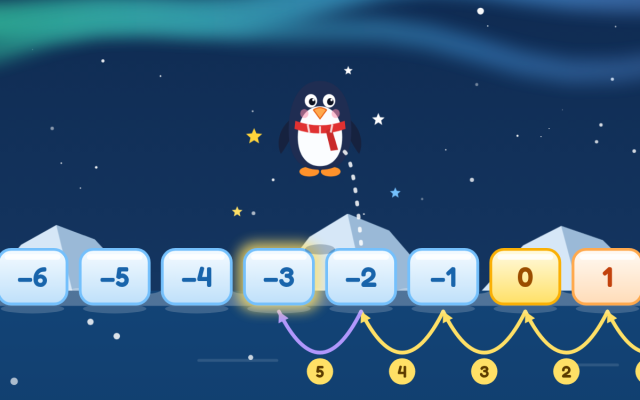
Negative Numbers: Count Back Through Zero with Pip
Learn what negative numbers are and how to count back through zero, by hopping along an ice number line, read…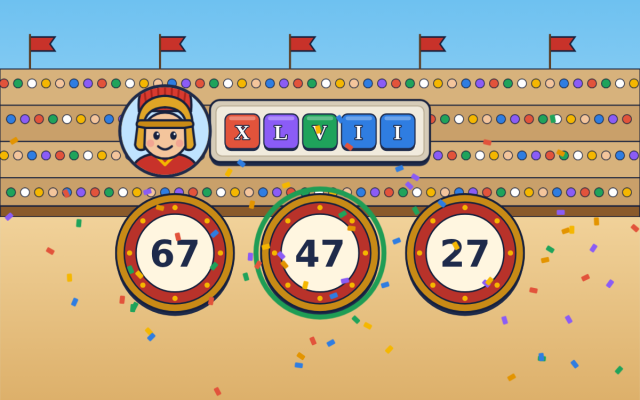
Roman Numerals: A Quest Through Ancient Rome with Cato
Learn to read Roman numerals from I to C by counting apples, calling up Roman soldiers, opening Colosseum gat…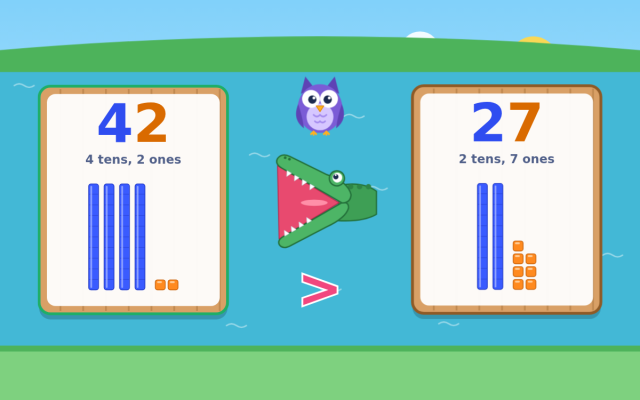
Place Value: Tens and Ones Adventure with Ollie the Owl
Learn place value with tens and ones: bundle cubes into tens, build and split numbers to 100, and compare the…
Place Value: Build Numbers to 1,000 with Digit the Robot
Learn place value with hundreds, tens and ones to 1,000. Turn ones into tens in a block machine, build number…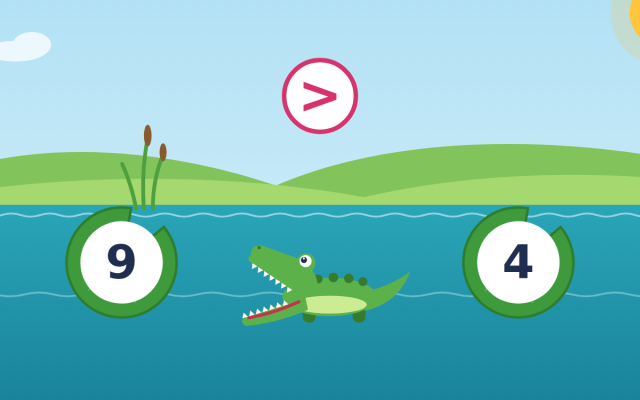
Comparing and Ordering Numbers: Feed Chompy the Croc
Learn all about comparing and ordering numbers to 100 with and =, then feed a hungry crocodile, hop a frog al…