What's inside
- Cube Crate
- Place Value House
- Tens Tower
- Split Baskets
- Croc River
- Frog Track
- Build the numbers 2 questions
- Tens balloons 2 questions
- Missing parts 2 questions
- Croc signs 3 questions
- Number line guesses 2 questions
What you'll learn
- Why 10 ones can be swapped for 1 ten
- The value of each digit in a two-digit number
- How to count in tens to 100, starting from any number
- How to partition numbers into tens and ones in different ways
- How to compare numbers using the <, > and = signs
- Where numbers up to 100 sit on a number line
About this adventure
Place Value Island is a free interactive game that teaches children aged 5–8 place value: how tens and ones build every number up to 100. Ollie the owl guides each step aloud, so young players learn by doing rather than by reading long instructions.
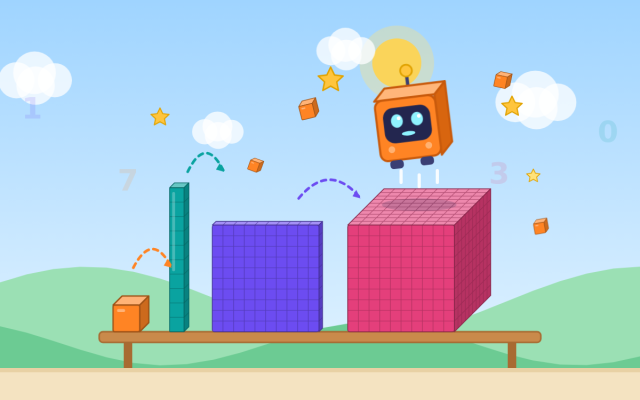
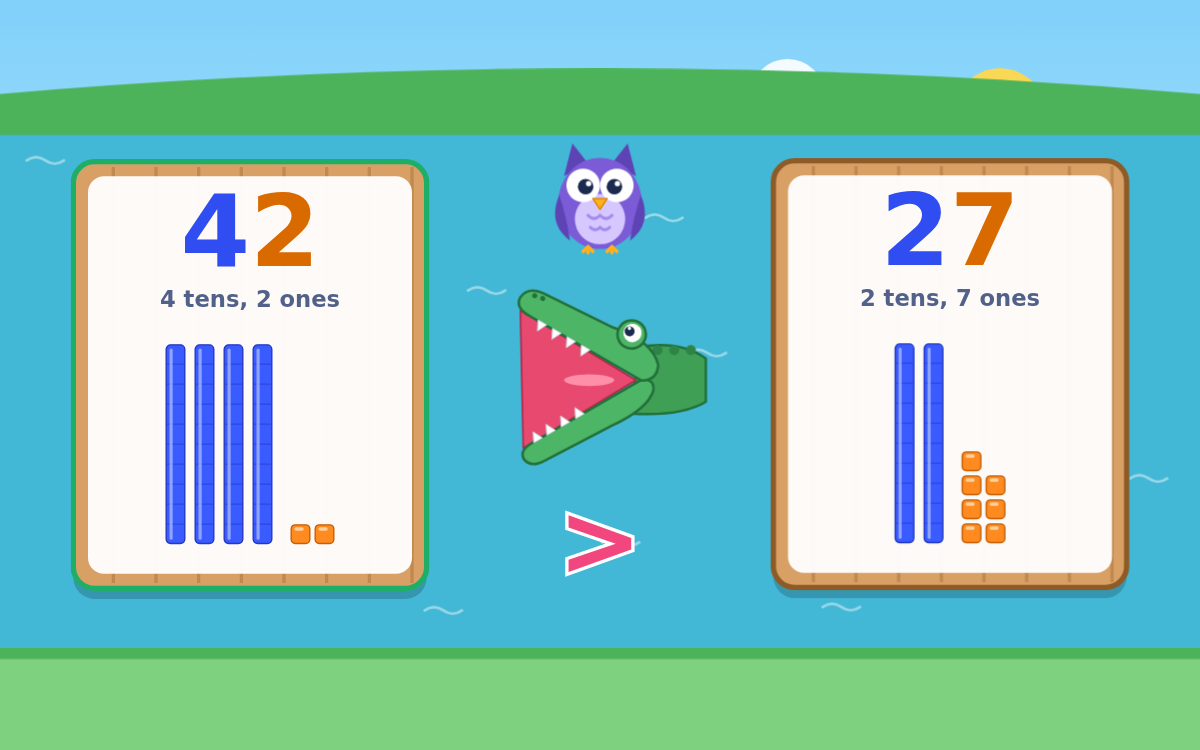
Children tap a crate to fill a mat with cubes, then snap 10 ones together into 1 ten. They drag tens and ones into the rooms of a house to build two-digit numbers and discover what each digit is worth. Later they count in tens to 100, partition numbers in different ways (46 = 40 + 6 = 30 + 16), help a croc compare numbers using <, > and =, and hop a frog along a 0–100 number line to estimate where numbers belong.
Each of the six chapters ends with a short practice round worth up to three stars, covering Year 2 place value in KS1 maths.
Questions and answers
What is place value, in simple words?
Place value means a digit's value depends on where it sits in a number. In 34, the 3 is in the tens place, so it is worth 30, while the 4 is in the ones place and is worth 4.
How do you explain tens and ones to a child?
Show them that 10 single ones can be grouped together to make 1 ten. Bundling 10 cubes into a stick helps children see that 23 is 2 tens and 3 ones, which makes counting and comparing numbers much easier.
What does partitioning a number mean?
Partitioning means splitting a number into parts that add back up to the whole. For example, 46 can be split into 40 and 6, but also into 30 and 16 or 20 and 26, because any ten can be broken into 10 ones.
What age is this place value game for?
It is designed for children aged 5 to 8 and matches Year 2 place value in the KS1 maths curriculum. Every instruction is spoken aloud, so children who are still learning to read can play on their own.
What does the place value game include and how long does it take?
There are six short chapters, from bundling cubes into tens to hopping a frog along a number line. Each chapter finishes with a practice round, and playing all of them takes about 30 minutes.
Next in Numbers
See all
Comparing and Ordering Numbers: Feed Chompy the Croc
Learn all about comparing and ordering numbers to 100 with and =, then feed a hungry crocodile, hop a frog al…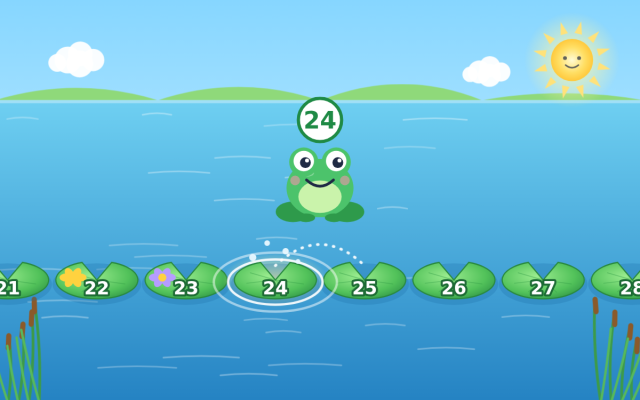
Counting to 100: Hop, Count and Blast Off with Pip
Learn counting to 100 forwards, backwards and in 2s, 5s and 10s by hopping lily pads, fuelling a rocket and b…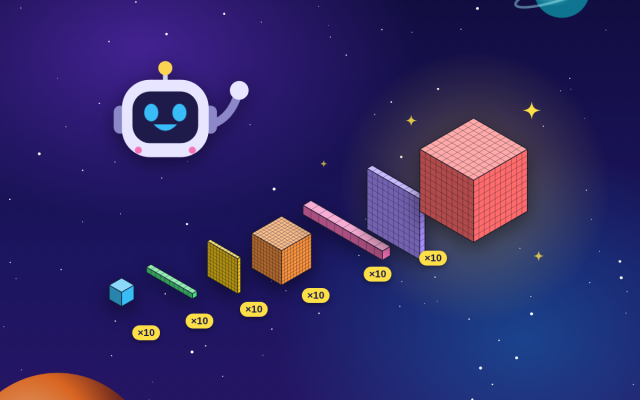
Place Value to a Million: A Rocket Mission with Pip
Learn place value to a million and how to count in powers of 10. Build blocks, set digits on a place value ch…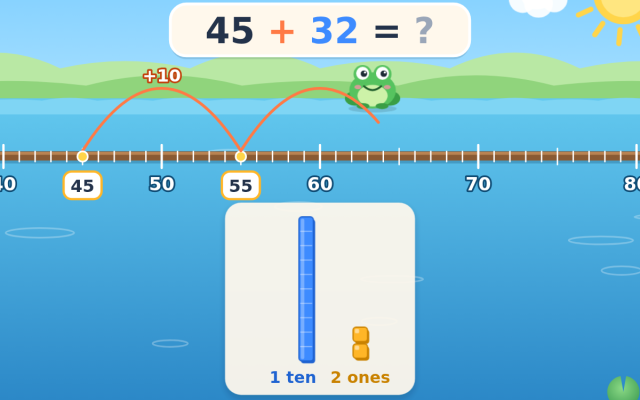
Adding and Subtracting: Hop Along with Hopper the Frog
Learn adding and subtracting with number bonds, number lines and columns, then tap, hop and exchange counters…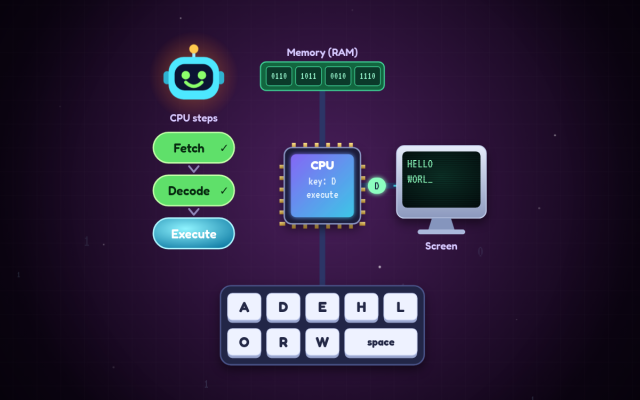
How Computers Work: A Time Machine Adventure with Bit
Learn how computers work, from the abacus to the CPU. Travel through time with Bit, build a computer and foll…
Instruments of the Orchestra: Build It, Then Conduct It
Learn how the instruments of the orchestra make their sounds, then build all four families step by step and c…