What's inside
- Hungry Croc
- Tens & Ones
- Frog Hop
- Duck Parade
- Croc Challenge 8 questions
What you'll learn
- What the greater than (>) and less than (<) signs mean
- When to use the equals sign (=)
- Why we compare the tens before the ones
- That ten ones make one ten
- Numbers get bigger moving right along a number line
- How to order numbers from smallest to largest and back
About this adventure
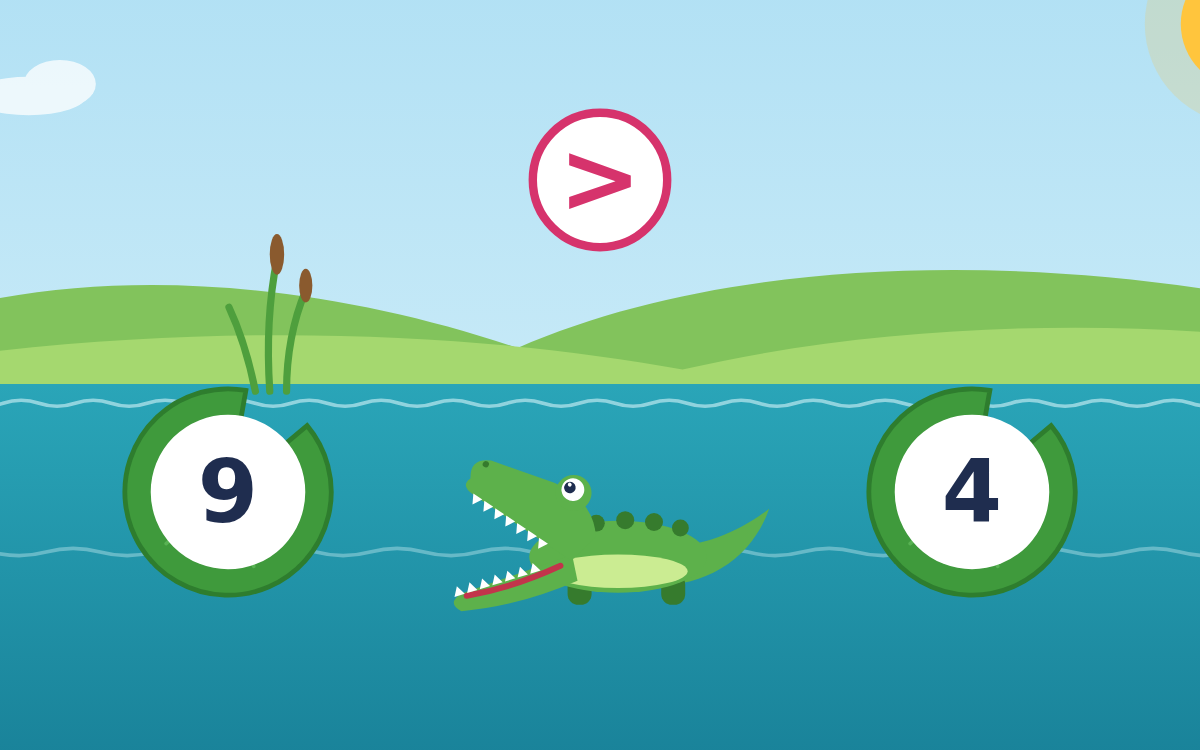
Croc Creek is a free interactive game that teaches children aged 6–8 about comparing and ordering numbers to 100, matching the Year 2 maths curriculum. Chompy the crocodile is always hungry, so his open mouth turns to face the bigger number and becomes the greater than (>) or less than (<) sign; when both numbers match, he shuts it to make equals (=).
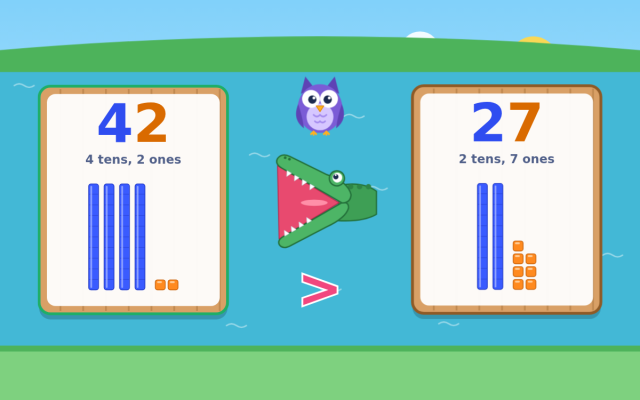
Children build numbers on rafts from bundles of ten sticks and single sticks, which shows why we compare the tens first and only look at the ones when the tens are the same. They then hop Froggy along stepping stones that form a number line, counting on in ones and in tens and placing numbers such as 45 between 40 and 50.
In Duck Parade they line numbers up from smallest to largest and from largest to smallest, before an eight-question challenge with up to three stars to win. Spoken instructions, short captions and a pointing hint guide every step.
Questions and answers
How do you compare two numbers, in simple words?
Look at the tens first: the number with more tens is bigger. If the tens are the same, compare the ones instead. For example, 47 is bigger than 42 because both have 4 tens but 47 has more ones.
What do the greater than and less than signs mean?
The sign > means greater than and < means less than, so 9 > 4 and 4 < 9. The wide open side always faces the bigger number, which is why many children picture a hungry crocodile's mouth.
How does a number line help with ordering numbers?
On a number line, numbers get bigger as you move right and smaller as you move left. Picturing where each number sits makes ordering easier: 45 lands between 40 and 50, so it comes after 38 and before 52.
What age is this comparing numbers game for?
The game is designed for children aged 6 to 8 and follows the Year 2 (KS1) maths aim of comparing and ordering numbers from 0 to 100 using <, > and =. Younger children can play with an adult, and older children can use it for revision.
What is in the game and how long does it take?
There are five short adventures: Hungry Croc, Tens & Ones, Frog Hop, Duck Parade and an eight-question Croc Challenge. Playing everything takes about 20 minutes, and Chompy talks children through each step out loud.
Next in Numbers
See all
Place Value: Build Numbers to 1,000 with Digit the Robot
Learn place value with hundreds, tens and ones to 1,000. Turn ones into tens in a block machine, build number…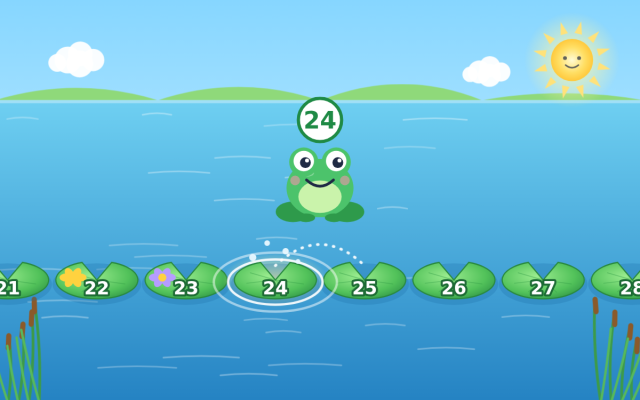
Counting to 100: Hop, Count and Blast Off with Pip
Learn counting to 100 forwards, backwards and in 2s, 5s and 10s by hopping lily pads, fuelling a rocket and b…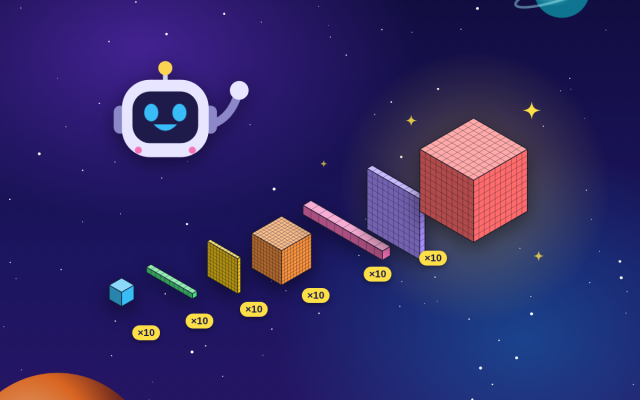
Place Value to a Million: A Rocket Mission with Pip
Learn place value to a million and how to count in powers of 10. Build blocks, set digits on a place value ch…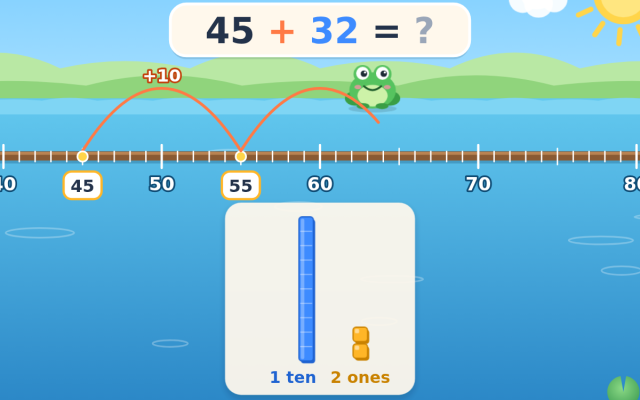
Adding and Subtracting: Hop Along with Hopper the Frog
Learn adding and subtracting with number bonds, number lines and columns, then tap, hop and exchange counters…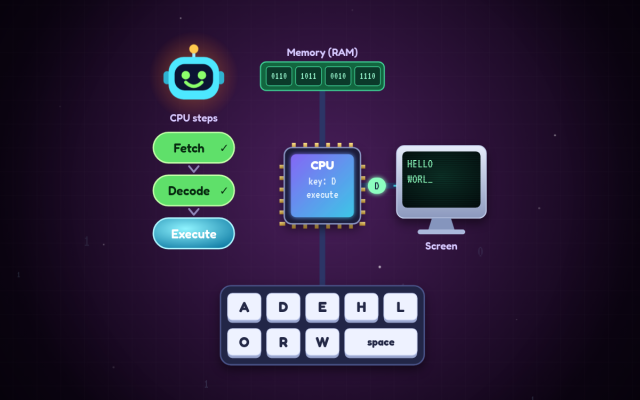
How Computers Work: A Time Machine Adventure with Bit
Learn how computers work, from the abacus to the CPU. Travel through time with Bit, build a computer and foll…
Instruments of the Orchestra: Build It, Then Conduct It
Learn how the instruments of the orchestra make their sounds, then build all four families step by step and c…