Year 3 Fractions
Bake and Share with Pip the Baker
Learn Year 3 fractions by cutting pies, snapping chocolate into tenths, comparing slices and adding fractions in Pip's bakery.
- Ages 7–9
- About 35 min
- 5 chapters + quiz
- Easy start
- Fractions, Decimals & Percentages
What's inside
- Fair Shares
- More Pieces
- Tenths Kitchen
- Big Slice Contest
- Fraction Mixer
- Bake-off Challenge 10 questions
What you'll learn
- Why a fraction needs equal parts, and what a unit fraction is
- What the numerator and denominator each tell you
- How to read and make non-unit fractions such as three quarters
- How to count up and down in tenths on a number line
- Why one eighth is smaller than one half, using a fraction wall
- How to add fractions with the same denominator, like 2/5 + 1/5
About this adventure
Year 3 Fractions is a free interactive game that teaches children aged 7–9 the fractions taught in the UK Year 3 maths curriculum: unit and non-unit fractions, tenths, comparing fractions and adding fractions with the same denominator.
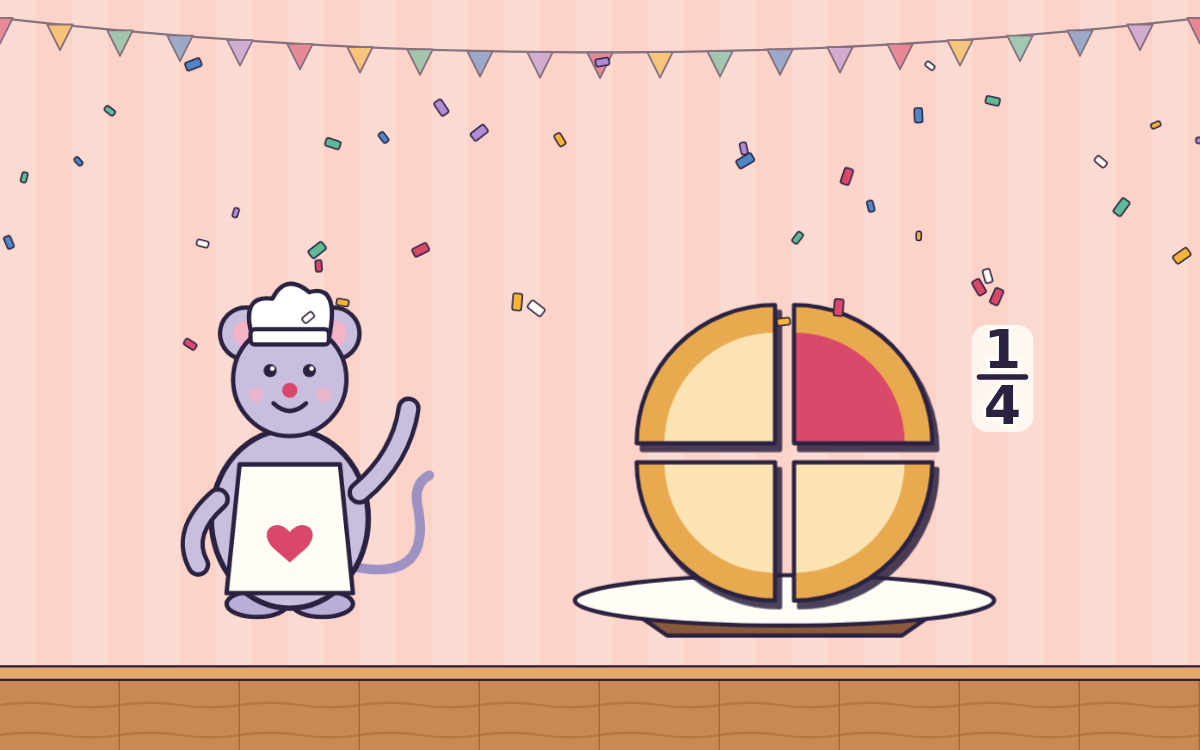
Players help Pip the baker on Hill Street. They cut pies into equal parts, take cake slices to make three quarters, snap a chocolate bar into tenths and hop along a number line, build a fraction wall and add slices on a plate. Along the way they learn that the denominator (bottom number) says how many equal parts the whole is split into, and the numerator (top number) counts the parts.
The game tackles two common mix-ups: thinking 1/8 is bigger than 1/2, and adding the denominators too. Every line is read aloud, and it ends with a 10-question Bake-off Challenge.
Questions and answers
What is a unit fraction?
A unit fraction is a fraction with 1 as the numerator, such as 1/2, 1/4 or 1/10. It means one of the equal parts a whole has been split into, so 1/4 is one of four equal parts.
Why is 1/8 smaller than 1/2?
One eighth is smaller than one half because the same whole is cut into more pieces, so each piece is smaller. With unit fractions, the bigger the denominator, the smaller the fraction.
How do you add fractions with the same denominator?
Add the numerators and keep the denominator the same, so 2/5 + 1/5 = 3/5. The denominator names the size of the pieces, and adding more fifths does not turn them into tenths.
What age is this fractions game for?
The game is made for children aged 7 to 9, mainly those in Year 3, and follows the UK National Curriculum for fractions. Older children can use it to revise, and younger ones can play with an adult.
What does the fractions game include and how long does it take?
It has five short chapters and a final 10-question Bake-off Challenge, with every line read aloud. Playing everything takes about 35 minutes, and children can start from any chapter on the Hill Street menu.
Next in Fractions, Decimals & Percentages
See all
Rounding Numbers: A Hill-Rolling Adventure with Pip
Learn how rounding numbers works for 10, 100, 1,000 and decimals, then build number-line hills, roll Pip and…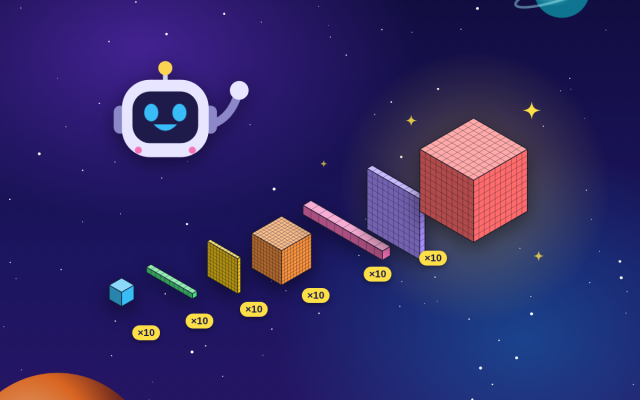
Place Value to a Million: A Rocket Mission with Pip
Learn place value to a million and how to count in powers of 10. Build blocks, set digits on a place value ch…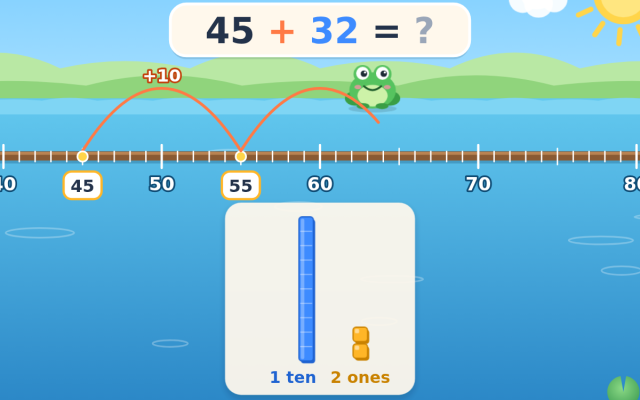
Adding and Subtracting: Hop Along with Hopper the Frog
Learn adding and subtracting with number bonds, number lines and columns, then tap, hop and exchange counters…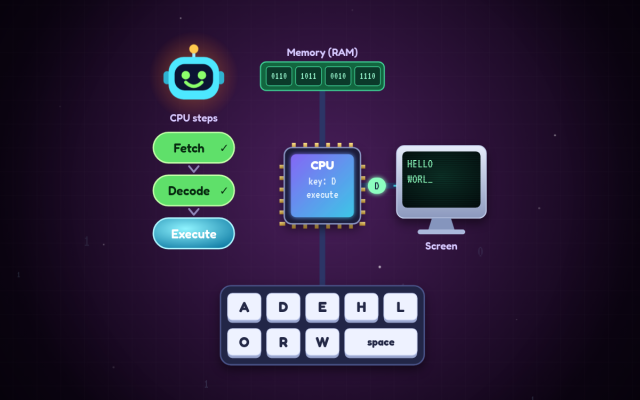
How Computers Work: A Time Machine Adventure with Bit
Learn how computers work, from the abacus to the CPU. Travel through time with Bit, build a computer and foll…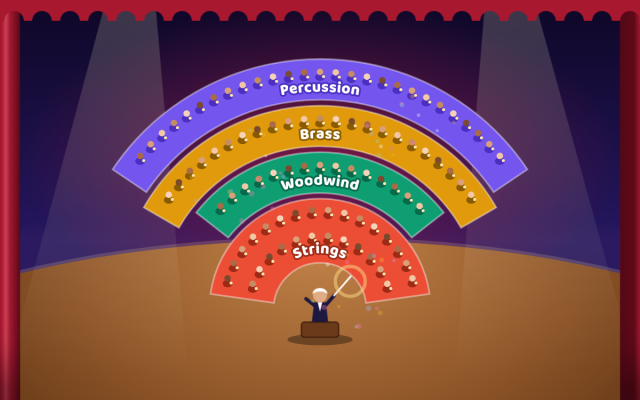
Instruments of the Orchestra: Build It, Then Conduct It
Learn how the instruments of the orchestra make their sounds, then build all four families step by step and c…
How Money Works: The Story from Barter to Bank Cards
Learn where money came from and how it works today: swap goods, mint coins, open a bank and tap to pay, one s…